Turning biodiversity commitments into business action
Businesses increasingly recognise biodiversity loss as a business risk. But translating global frameworks into practical action remains a challenge. Drawing on work with Danish Industry, Rosie Sibley explains how companies can move from ambition to implementation.
The global economy depends on nature, yet biodiversity is declining at an unprecedented rate. The Intergovernmental Science-Policy Platform on Biodiversity and Ecosystem Services (IPBES) estimates that up to one million species now face extinction - more than at any time in human history. Land-use change, deforestation, habitat loss, pollution, invasive species and climate change are driving this decline.
As IPBES Business and Biodiversity Assessment (2026) highlights, businesses are deeply intertwined with these pressures. Corporate activities contribute to biodiversity loss, yet companies also rely heavily on the ecosystems that sustain their operations and supply chains. For many organisations, biodiversity is therefore both a responsibility and an emerging business risk.
At Preferred by Nature, we see many companies struggling to know where to start. The landscape of biodiversity frameworks is complex, and measurement remains challenging. Unlike climate change, there is no single indicator for biodiversity. Instead, businesses rely on proxies such as ecosystem integrity, species intactness and habitat condition.
Preferred by Nature worked with the Danish furniture producer Kvist Industries A/S, whose leather and wood supply chains depend heavily on ecosystem services such as soil health, water availability and stable local climates. Like many other companies, Kvist Industries A/S recognised that biodiversity loss could pose long-term risks to both sourcing and production, but translating this awareness into practical action was challenging.
Working together, we supported Kvist Industries A/S to develop a structured biodiversity action plan, focusing on one raw material at a time. The process began by identifying Kvist Industries A/S’ key pressures, impacts and dependencies across its chosen supply chains. This assessment prioritizes where biodiversity risks are most significant and identify practical responses. By turning a broad sustainability ambition into concrete steps, the collaboration created a clear pathway for integrating biodiversity considerations into business decision-making.
“Many businesses are looking for clear pathways to move from biodiversity ambition to implementation.”
Rosie Sibley, Biodiversity Lead, Preferred by Nature
Companies and financial institutions are increasingly looking for ways to mitigate their impacts on biodiversity within operations and across value chains. Yet many struggle to navigate the growing number of biodiversity initiatives and standards and determine which tools best support effective action.
Expectations for companies to measure and disclose biodiversity impacts are also rising. The IPBES Business and Biodiversity Assessment, published on 9 February 2026, highlights that all businesses - regardless of size or sector - depend directly or indirectly on nature. The assessment emphasises the need for companies to understand their impacts and dependencies while recognising the wide range of tools, methods and frameworks now available.
At the global level, the Kunming–Montreal Global Biodiversity Framework (GBF) sets out targets to halt and reverse biodiversity loss by 2030. Target 15 calls on large companies and financial institutions to monitor, assess and disclose their nature-related risks, impacts and dependencies. This aligns with emerging reporting frameworks such as the Corporate Sustainability Due Diligence Directive (CSDDD), the Taskforce on Nature-related Financial Disclosures (TNFD) and the Science Based Targets Network (SBTN).
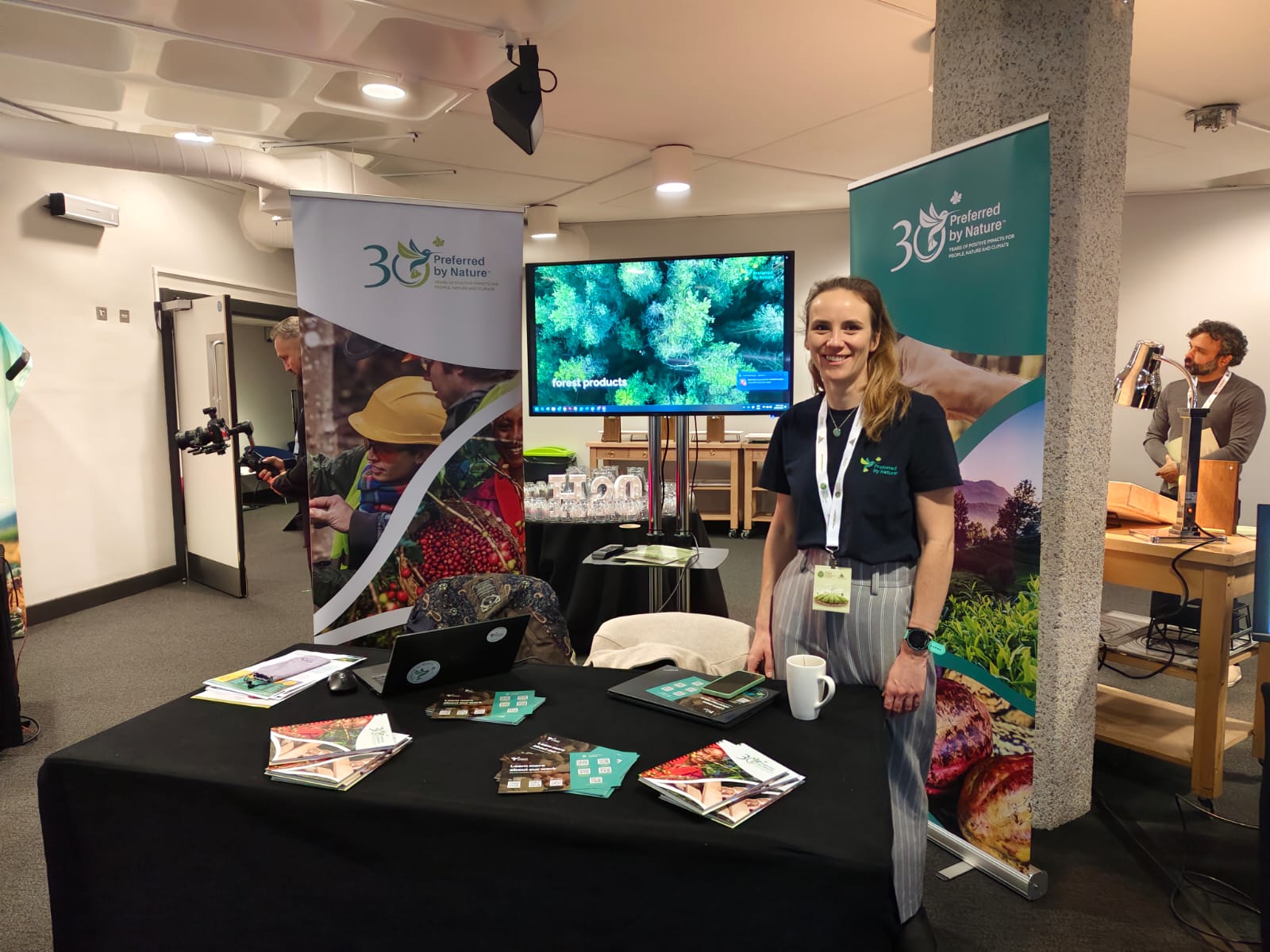
As Biodiversity Lead at Preferred by Nature, we work with companies to turn these global frameworks into practical action. Recently, we partnered with Dansk Industri (the Confederation of Danish Industry), which represents more than 20,000 Danish companies, to pilot a step-by-step approach for developing corporate biodiversity action plans. The approach draws on existing frameworks, including SBTN and TNFD, but translates them into practical guidance for businesses.
The pilot involved five companies across manufacturing and consumer goods sectors, including agri-food, furniture, cosmetics and textiles – including Kvist Industries A/S. Drawing on more than three decades of field experience across global commodity supply chains, we helped these organisations develop a structured process tailored to small and medium-sized companies at the early stages of their biodiversity journey.
The pilot provided practical insights into how biodiversity can be integrated into business operations. The approach, aligned with SBTN, included several key steps:
Scoping and assessment – identifying where business activities interact with nature and screening for biodiversity risks and opportunities.
Prioritisation – focusing on locations and commodities with high biodiversity value or where business activities the greatest impacts or pressures.
Goal and target setting – translating commitments into time-bound and measurable objectives.
Action – implementing interventions such as avoidance, mitigation, regenerative sourcing, and restoration.
Monitoring and reporting – tracking progress and communicating outcomes in line with frameworks including TNFD and SBTN.
In my work, I see a growing willingness from businesses to engage with nature-related risks and responsibilities. But many are still looking for clear pathways to move from ambition to implementation and resilience.
Businesses have a vital role to play in halting and reversing biodiversity loss. With the right guidance, practical tools and credible expertise, companies can begin embedding biodiversity into everyday decision-making - from sourcing practices to supply chain management. Turning biodiversity ambition into action will not happen overnight, but practical steps taken today can help businesses contribute to a more resilient, nature-positive future.
How Preferred by Nature supports business action on biodiversity
We support companies to:
- Develop robust biodiversity policies and commitments
- Design and implement strategic action plans aligned with global frameworks
- Train internal teams and suppliers
- Monitor and verify progress using credible methods and indicators
Further guidance on corporate biodiversity action plans developed for the Danish Biodiversity Partnership is available from Preferred by Nature.
Key biodiversity frameworks for business include:
Kunming–Montreal Global Biodiversity Framework (GBF)
Adopted under the Convention on Biological Diversity in 2022, the GBF sets global targets to halt and reverse biodiversity loss by 2030. Target 15 calls on large companies and financial institutions to assess and disclose nature-related risks, impacts and dependencies.
TNFD – Taskforce on Nature-related Financial Disclosures
A global framework helping companies and financial institutions identify, assess and disclose nature-related risks and opportunities.
SBTN – Science Based Targets Network
Provides methods and guidance for companies to set science-based targets for nature, including biodiversity, freshwater and land use.
CSDDD – Corporate Sustainability Due Diligence Directive
An EU directive requiring companies to identify and address environmental and human rights impacts across their operations and value chains.


Rosie Sibley