Restoring the landscape that could bring Rokan Hulu’s water back
In parts of Rokan Hulu, Riau, the dry season now brings lower reservoirs, weaker rivers and, for some households, the cost of buying water brought in by truck. It is a local story with a global echo: as heatwaves grow longer and more frequent worldwide, UN Office for Disaster Risk Reduction (UNDRR names ecosystem degradation as one of the root causes of heat risk.
A landscape analysis carried out under the Rokan Hulu Landscape and Livelihoods Initiative (ROHULLI) links these water pressures to more than two decades of land-cover change. It also shows where restoring ecosystems could help bring back the natural functions that people and nature depend on.
A landscape that changed quickly
Land-cover data from the landscape analysis shows that between 2000 and 2024, plantation areas in Rokan Hulu grew from about 225,000 hectares to more than 650,000 hectares. Over the same period, forest cover fell from about 230,800 hectares to 52,800 hectares, less than a quarter of what it was. Swamp areas shrank from about 22,800 hectares to around 2,000.
Much of the new plantation land came from forest, shrubland, swamp and other farmland. With less vegetation, the land loses much of its ability to hold water. Many smallholders in the regency are already changing how they farm, including through the initiative's regenerative agriculture training.
According to the analysis, these shifts have contributed to habitat fragmentation and have disrupted hydrological functions, the way the land stores and releases water. The effects are most visible in important water-catchment areas.
Water under pressure in the dry season
Community interviews carried out for the analysis describe lower water levels in rain-fed reservoirs and reduced river flows during the dry season. Some households reported needing to buy water transported from elsewhere.
Satellite-based analysis tells a similar story. Areas with less vegetation cover generally showed higher surface temperatures and stronger signs of dryness and plant water stress. Trees and other plants shade the soil and release moisture into the air, which helps keep land cooler and wetter. When that cover is cleared, the ground heats up faster and dries out sooner.
The link between land, heat and water reaches far beyond Rokan Hulu. Around the world, heatwaves are becoming longer, more frequent and more severe, and UNDRR names ecosystem degradation as one of the root causes of heat risk. It also notes that people who work outdoors, including in farming, face some of the highest exposure. For smallholders in Rokan Hulu, hotter and drier land can put more pressure on the water they rely on every day.
Where restoration could make a difference
By combining land-cover, temperature and vegetation data, the analysis identified restoration opportunities in Rambah, Rokan IV Koto and parts of Tandun. A separate biodiversity assessment, still in progress, is adding detail on important forest patches and how habitat change may have affected wildlife. The analysis outlines three practical approaches:
- restoring vegetation on degraded land
- protecting riparian areas, the strips of land along rivers and streams
- managing buffer areas around sensitive sites in a sustainable way
Together, these approaches aim to restore how the landscape works, not only how it looks.
What restoration could bring back
Potential benefits identified in the analysis include stronger hydrological functions, greater vegetation cover and carbon storage, better resilience to drought and more reliable access to clean water.
The benefits reach beyond water. Healthier landscapes can also support biodiversity, protect soil and help communities adapt to a changing climate. Because water is not only a household concern, either. Smallholder yields, mill operations and the long-term stability of palm oil supply in Rokan Hulu all depend on a landscape that can hold water through the dry season.
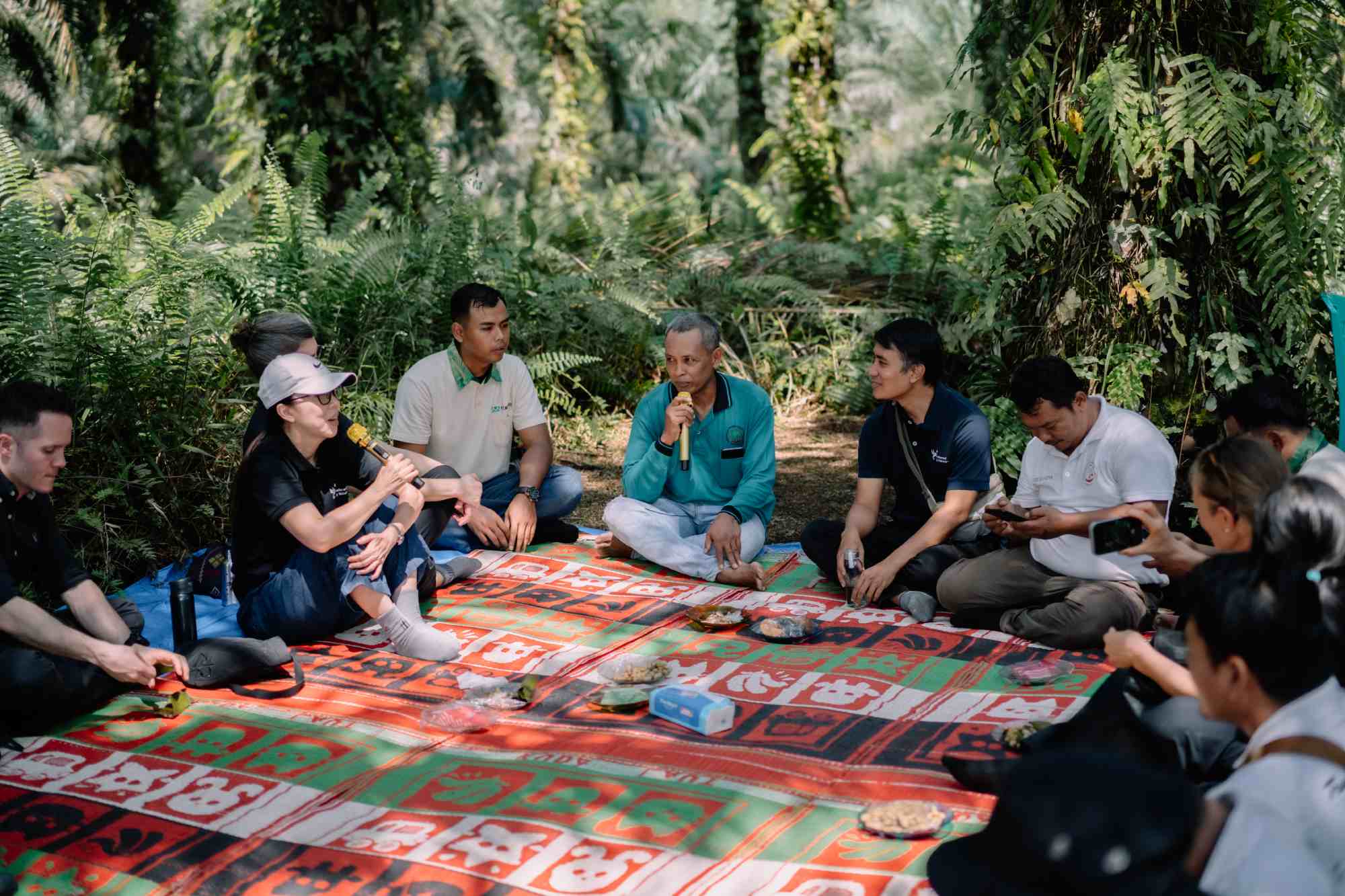
Shared spatial evidence helps farmer groups, companies and local authorities agree where to act, and feeds into the initiative's EUDR risk assessment.
From evidence to action
The findings will feed into stakeholder consultations planned under the initiative, including its EUDR risk assessment, so that local, regional and national actors can act on the same evidence.
“Restoration matters not only for recovering forests and ecosystem functions, but also for protecting water resources. Restoring upstream areas and riverbanks can help bring back the landscape's natural water functions and strengthen its ability to provide water-related ecosystem services.”
Miftahul I. Purnama – Sustainability Analyst & GIS Specialist at Preferred by Nature
The analysis does not answer every question. Its value is in giving farmers, companies and local government a shared picture of the landscape, and a starting point for deciding together where restoration can do the most good.
Feature image: An oil palm smallholder in Rokan Hulu. Healthy yields depend on a landscape that can hold water through the dry season. Photo: Rian Heryanto / Copyright 2026 Preferred by Nature.
About the initiative
The Rokan Hulu Landscape and Livelihoods Initiative (ROHULLI) runs from April 2025 to October 2029 and is funded by the Ministry of Foreign Affairs of Denmark through Danida Green Business Partnerships. Preferred by Nature leads the initiative, working with Ferrero, Musim Mas and the Sustainable Agriculture Network (SAN). It supports more inclusive, resilient and profitable oil palm production for smallholders, with a focus on young people and women.
Alongside its work with smallholders on regenerative farming, certification and new sources of income, the initiative aims to restore 1,000 hectares of degraded land and bring local stakeholders together to reduce deforestation risks in the landscape.
Find out more about the Rokan Hulu Landscape and Livelihoods Initiative


For more information, please contact:
