Raising the social and environmental bar for sustainable cocoa production in West Africa
West Africa produces around 70% of the world’s cocoa. Ghana, the second-largest producer, contributes 20–25% of global supply and accounts for roughly 3–8% of national GDP. Cocoa production is dominated by smallholder farmers, many of whom face persistent poverty. At the same time, cocoa expansion continues to drive deforestation, contributing to an estimated 13% of protected forest loss nationwide.
The Wassa Amenfi landscape in western Ghana reflects these interconnected challenges. Farmers are increasingly affected by climate change, declining participation in cocoa farming, and land degradation, alongside growing pressure from evolving sustainability regulations, including the EU Deforestation Regulation (EUDR).
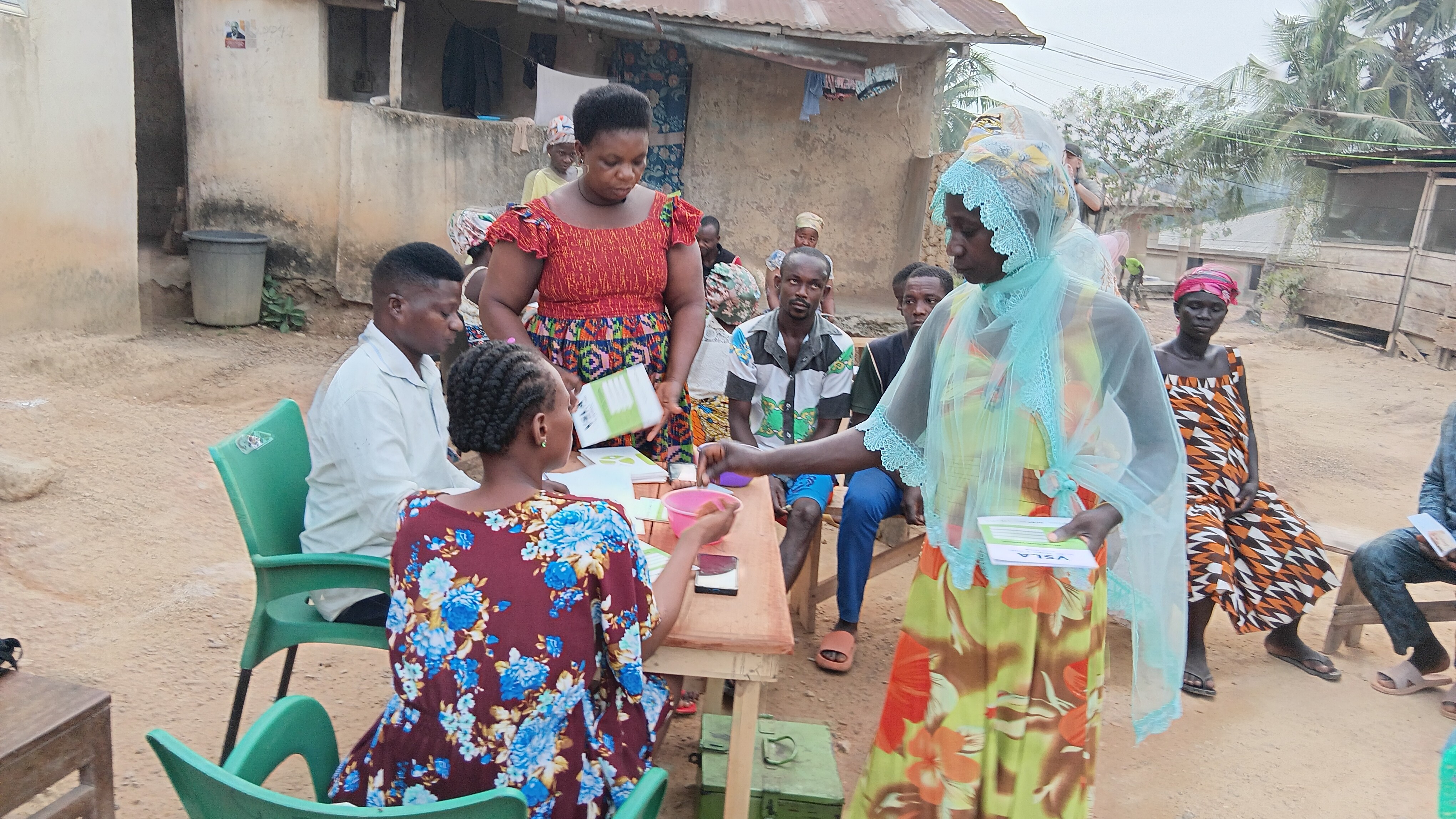
The “Wassa Amenfi Cocoa Landscape Initiative, Ghana (WACLI)” aims to demonstrate a practical and commercially viable model for landscape-level sustainability planning and responsible sourcing. The project runs from 2023 to 2027 and is funded by the Danida Green Business Partnership programme of the Danish Ministry of Foreign Affairs. It is implemented by Preferred by Nature, Solidaridad West Africa, Rikolto Ghana, and Ferrero Group as the commercial partner in the Wassa Amenfi West Municipality.
The project focuses on strengthening both the social and environmental sustainability of cocoa production in West Africa. By addressing the interconnected issues of deforestation and rural poverty, it provides a model for responsible sourcing tailored to the needs of cocoa-growing communities. Through multi-stakeholder collaboration and applied research, the project supports the transition to profitable cocoa agroforestry systems, promotes the generation of ecosystem services, and encourages the diversification of both on- and off-farm income streams.
The project addresses several interconnected challenges:
- Declining cocoa productivity due to ageing trees, soil degradation, pests and diseases, and the spread of illegal small-scale mining (galamsey)
- Low resilience of farming systems to climate change and ongoing ecosystem degradation
- Persistent poverty and limited economic opportunities, particularly for women and youth
- Expansion of cocoa farming into forest areas, contributing to continued forest loss
- High risk of non-compliance under evolving sustainability requirements and market expectations
The project primarily benefits smallholder cocoa farmers in the Wassa Amenfi West Municipality, with a focus on women and youth. The intervention directly supports 5,000 farmers to adopt agroforestry practices and improve resilience to climate change. Including their households, this represents approximately 25,000 people.
In addition, around 3,000 community members benefit from improved livelihood opportunities through income diversification and small business development.
The project aims to demonstrate a commercially viable model for landscape-level sustainability planning and responsible sourcing, with strong potential for replication and scaling across cocoa-producing regions.
The objective aligns with SDGs 2.3, 2.4, 8, 15.2, and 17.17, and is pursued through the following actions:
- Promote climate-smart cocoa agroforestry and regenerative agricultural practices alongside income diversification initiatives to strengthen farmer livelihoods and resilience.
- Establish a multi-stakeholder forum at jurisdictional and landscape levels to support landscape restoration, forest protection, improved farmer livelihoods, and the mobilisation of sustainability investments.
- Strengthen Ferrero’s cocoa supply chain by fostering long-term partnerships with key stakeholders including producers and suppliers, while supporting alignment with relevant European Union regulations.
Approach and activities
The project supports the conversion of 5,000 hectares of cocoa farms into diversified cocoa agroforestry systems through in-field coaching, farm planning, the provision of tree seedlings, and conditional financial incentives linked to tree survival.
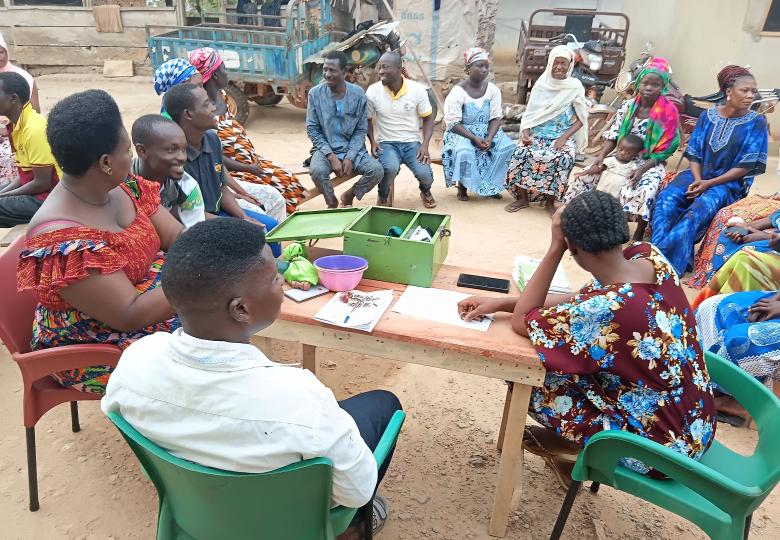
To promote financial inclusion and community resilience, the project establishes 50 Village Savings and Loan Associations (VSLAs) with 1,000 direct members, indirectly benefiting approximately 5,000 household members. Through these groups, an estimated EUR 250,000 in savings is expected to be mobilised, alongside cumulative loan disbursements of up to EUR 350,000 to support livelihood activities and small enterprises.
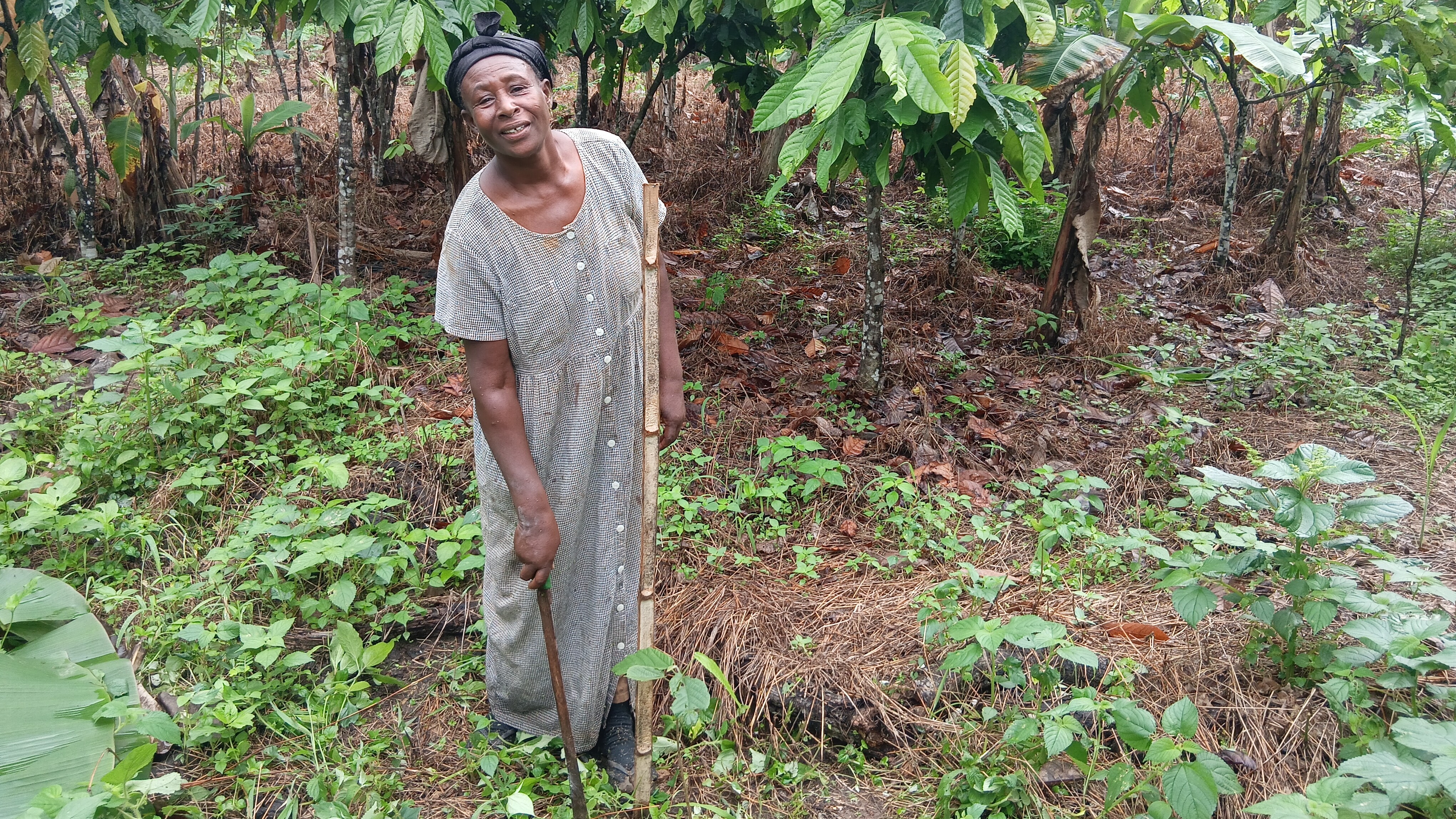
The project also supports local economic development by establishing and strengthening at least 10 agribusinesses and 20 additional small businesses, creating diversified income opportunities for farmers and communities.
A central component is the establishment of a multi-stakeholder forum, with working groups (Technical, Governance, and Finance). This platform facilitates coordinated landscape-level planning and more inclusive decision-making for forest protection, restoration, and sustainable development. In parallel, the project develops data systems, tools, and financial mechanisms to guide and prioritise investments across the landscape.
Progress to date
The project has made significant progress in advancing climate-smart cocoa production, strengthening community resilience, and fostering collaboration among stakeholders.
- 2,610 farmers from 50 communities have been trained in climate-smart and agroforestry practices, supported by Community Farmer Leads
- 115,200 multi-purpose tree seedlings, including timber, fruit, and medicinal species, and 5,000 cocoa seedlings have been distributed to over 2,600 farmers, based on individual farm plans and needs assessments.
- Conditional financial incentives in the form of Payment for Ecosystem Services (PES) have been provided in return for farmers’ work and commitment to support tree establishment and survival
Two cocoa demonstration farms have been established as Farmer Field Schools and hubs for promoting farmer engagement and the adoption of climate-smart agroforestry practices
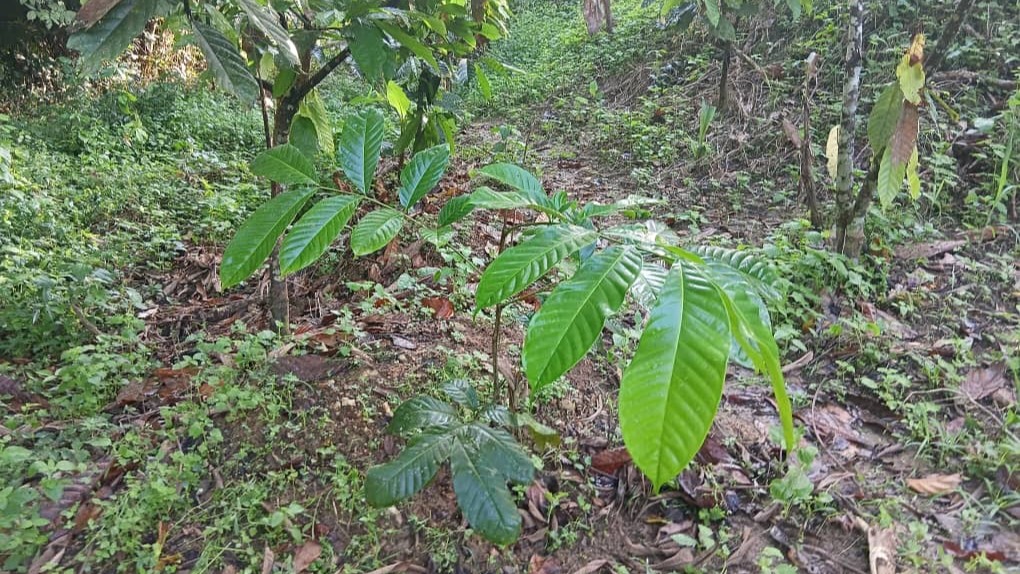
- Farmers are adopting improved land-use practices
- Youth engagement and local service provision have been strengthened through the formation and operation of three youth-led farming service groups
- Financial inclusion efforts have led to the establishment of 48 Village Savings and Loan Associations (VSLAs), with a total membership of 1,158 individuals of whom 58% are women and 51% youth.
- Women have increased access to finance to support income generating activities.
- Rural women and youth have strengthened their capacity through training and coaching, supporting more active roles in decision-making on income opportunities
- Community-led businesses, such as rice milling, corn milling and gari processing, have been established in seven communities, engaging over 200 people, including more than 130 women, with strong local ownership
- At the landscape level, the Wassa Amenfi Landscape Multi-stakeholder Platform has been established, with technical, governance, and finance working groups. It brings together stakeholders from the private sector, government institutions, civil society, traditional authorities, local communities, farmer groups, and the media to support a shared vision, coordination, and investments in the landscape
- The project is also contributing to knowledge development through research. So far, two masters’ theses have been completed, and the findings are being incorporated into project activities, especially Ferrero and other stakeholders in the landscape.
Overall, the project is driving measurable impact by improving farmer incomes, restoring ecosystems, reducing deforestation, and building climate-resilient cocoa system. The lessons generated support continuous improvement and provide a foundation for scaling Ferrero’s cocoa sustainability programme.


Detail Proyek
Judul
Wassa Amenfi Cocoa Landscape Initiative, Ghana
Dr. Shalom Daniel Addo-Danso
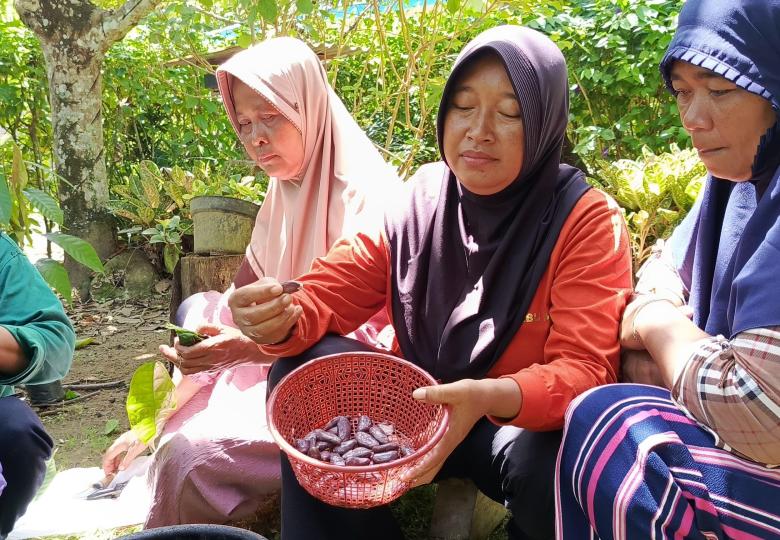
Introducing climate-smart cocoa farming among smallholders for ecosystem-based adaptation in La...
Preferred by Nature has partnered with Rikolto Indonesia to implement the project ”Introducing climate-smart cocoa farming among s...
Raising the social and environmental bar for sustainable cocoa production in West Africa
West Africa produces around 70% of the world’s cocoa. Ghana, the second-largest producer, contributes 20–25% of global supply and ...
Turning the tide: Mobilising cocoa communities against galamsey destruction for long-term livel...
Cocoa is a cornerstone of Ghana’s economy. As the world’s second-largest producer, it is a major source of foreign exchange and su...
Community-based Adaptation to Climate Change and Advocacy in Wassa Amenfi West, Ghana
The "Community-based Adaptation to Climate Change and Advocacy in Wassa Amenfi West, Ghana" project focuses on strengthening resil...