Why rice deserves a place in the global sustainability debate
Rice feeds billions yet remains overlooked in global sustainability discussions. As climate pressures intensify and the need for coordinated action grows, it is time to bring rice to the centre of the conversation.
When more than 300 people from 23 countries gathered recently in Jakarta—researchers, government officials, millers, traders, farmers and civil society representatives—it signaled something important: the conversation about sustainable rice is finally gaining momentum. For a crop that billions rely on every day, this is long overdue.
Rice has always been central to food security, culture and livelihoods, particularly across Asia and Africa. Yet it rarely receives the same global attention as commodities like soy, palm oil or beef. Its very familiarity often makes it invisible. But rice is now facing pressures that make it impossible to ignore. Climate change is altering growing conditions faster than many farmers can adapt. Droughts last longer, floods arrive more intensely, and rainfall patterns are becoming harder to predict. Added to this, rice fields consume more freshwater than any other agricultural system, and they generate greenhouse gases at a level that surprises most people—on par with global aviation.
“The issue is not a lack of solutions — it is making sure they reach the farmers who need them.”
These challenges are significant, but they are not insurmountable. In fact, rice offers an opportunity to achieve meaningful sustainability gains in a relatively short time. The practices needed to reduce emissions, conserve water and improve resilience already exist. Alternate wetting and drying, for example, is a simple water-management technique that has consistently shown it can reduce methane emissions and save water. Improved seed varieties, better soil management and more efficient nutrient application are also well-proven. The issue is not a lack of knowledge; it is the difficulty of making sure that knowledge is accessible, practical and supported by the wider system.
Connecting science, policy and farmers
In my work across different rice-producing regions, I have seen how research, policy and farming often operate independently. Researchers generate strong evidence and develop promising innovations, but these advances do not always reach farmers in a usable form. Policymakers develop programmes with good intentions, but implementation can lag without sufficient field-level support. And farmers, who stand to benefit most from sustainable practices, may not have the financial or technical capacity to make changes on their own.
When these gaps are bridged, the impact can be substantial. A good example is the Low Carbon Rice project supported through the EU SWITCH-Asia Programme. In this initiative, farmers, millers, researchers and policymakers worked together from the start. Farmers tested new practices with scientific guidance. Millers provided feedback from the market. Policymakers engaged in discussions based on evidence from the field. This collaboration helped ensure that improvements were not only technically sound but also practical and economically sensible. It showed what is possible when different parts of the value chain move in the same direction.
However, the broader rice sector remains fragmented. Around the world, governments, researchers, civil society organisations and companies often work on rice sustainability, but their efforts are rarely aligned. This lack of coordination slows progress and makes it harder to scale successful approaches.
A new platform for collaboration
This is one reason why the establishment of the International Sustainable Rice Forum (ISRF) is noteworthy. The first ISRF offers a new platform for bringing together the diverse actors who influence the rice sector. It aims to create space for shared learning, reduce duplication of efforts and help partners identify where their work can complement each other. While still in its early stages, ISRF represents a step toward the kind of collaboration that could help the sector move from individual projects to broader, more consistent progress.
Still, any strategy for sustainable rice must start with farmers. They manage the landscapes on which global food security depends, and they face the immediate consequences of climate instability. Sustainable rice cannot be designed without their participation. Their knowledge, experience and constraints must shape how solutions are implemented. When farmers are part of the development of new approaches, adoption becomes far more likely—and the benefits extend beyond environmental gains to improved incomes and stability.
Rice matters far beyond the places where it is grown. It stabilises economies, influences trade flows, and remains a daily necessity for billions of people. Its relationship with climate change—both as a contributor and as a victim—means that what happens in rice fields will increasingly affect global resilience. As pressures mount, the sector will need coordinated, practical and grounded efforts to adapt.
The world is beginning to recognise this. The tools and practices are available, and promising collaborations are already underway. What is needed now is steady, collective commitment: not dramatic declarations, but consistent alignment between science, policy and farming practice. If we take that path, the rice sector can become more resilient, more efficient and better prepared for the challenges ahead.
Rice has shaped societies for centuries. Ensuring it remains reliable in a changing climate is one of the most important—and achievable—tasks in global agriculture today.
Featured photo shows rice farmers working SRP-certified paddy fields in Central Java, Indonesia.
Photo by Kristian Buus for Preferred by Nature
About the author
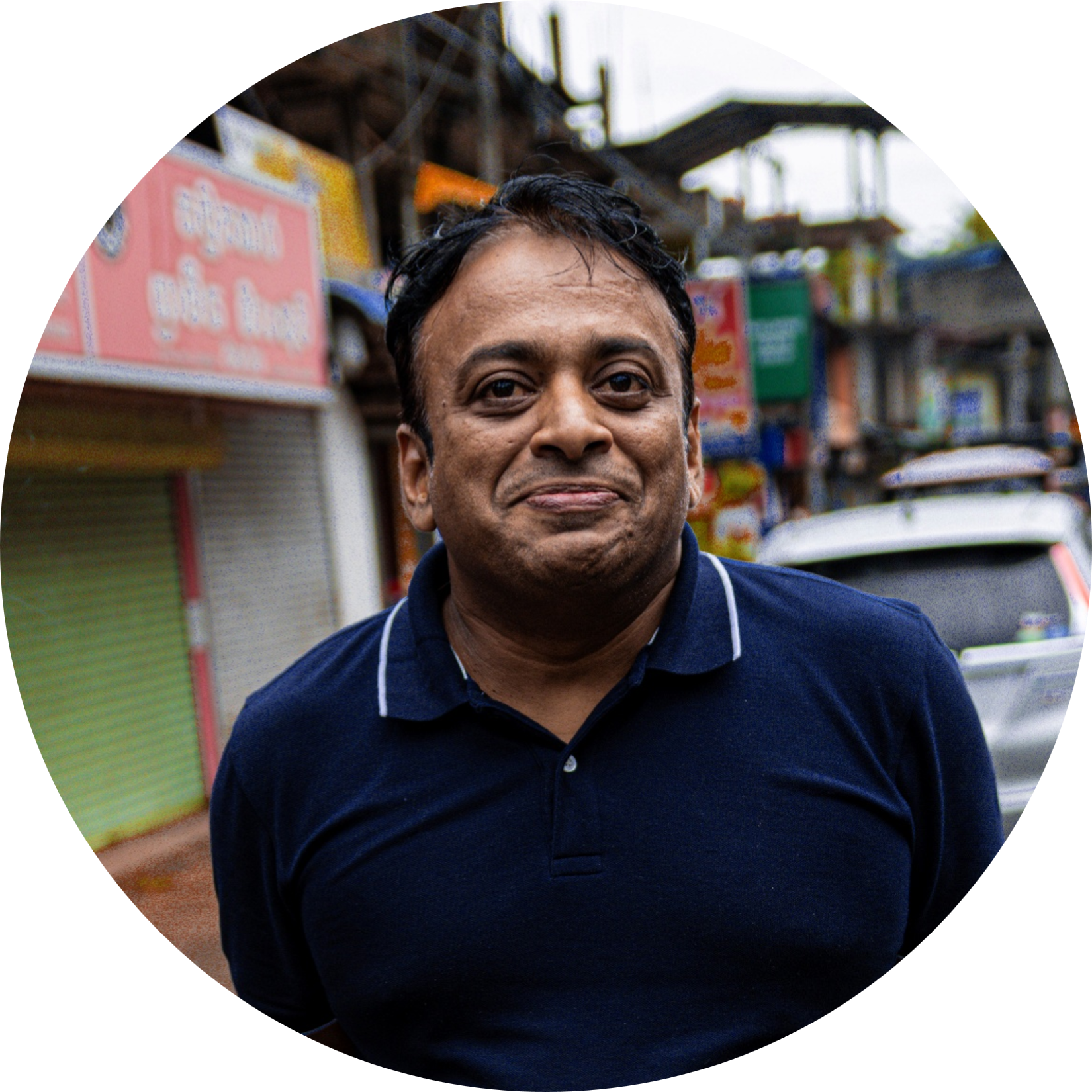 Aadarsh Mohandas is Preferred by Nature’s Regional Director for South Asia and the organisation’s Rice Commodity Lead. Based in India, he oversees operations across the region, manages key client relationships and leads market development efforts. Aadarsh has worked across Asia, Africa, Europe and Latin America in roles spanning consulting, academia, sustainability projects and third party assurance. He is an authorised public trainer and lead auditor for the Sustainable Rice Platform. He was a steering committee member for the Low Carbon Rice project supported through the EU SWITCH-Asia Programme.
Learn more about Preferred by Nature’s work with sustainable rice.