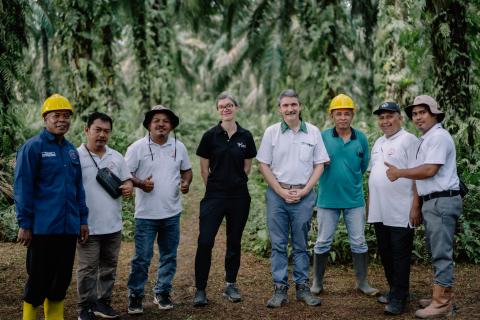
Building implementation capacity across Latin American supply chains
Across Latin America, sustainability regulations are raising the bar for agricultural and forest supply chains, and effective due diligence depends on whether local organisations have the systems and confidence to put it into practice.
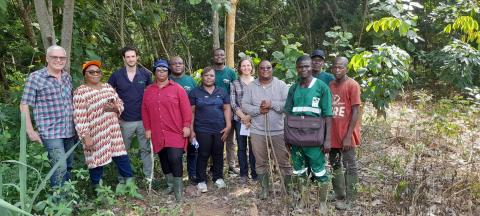
Since 2022, Preferred by Nature and the German Development Cooperation GIZ have worked across Colombia, Ecuador and Peru to strengthen capacity in agricultural and forest supply chains.
The work supports producers (micro and small), producer associations, cooperatives, public institutions, private-sector actors and civil society organisations as they adapt to evolving sustainability regulations and market requirements, including the EU Deforestation Regulation (EUDR), the Corporate Sustainability Due Diligence Directive (CSDDD) and the German Supply Chain Due Diligence Act (LkSG).
The projects combined risk assessments, action plans, technical guidance and capacity-building activities. More importantly, they helped local actors approach due diligence not only as a compliance requirement, but as a practical way to manage risk, strengthen internal processes and create long-term value. In practice, this means stronger, more capable producer associations that are better equipped to respond to an increasingly demanding market, improve their competitiveness and create opportunities for the micro and small-scale producers they represent, who may face greater challenges in keeping pace with evolving market requirements and often rely on these organisations as their main or only route to market; which is why this type of action is so relevant.
A practical system for local action
One key outcome was the development of the Due Diligence System (DDS), a structured framework developed by Preferred by Nature to help organisations build and implement their own internal risk management systems.
Rather than adding another layer of compliance, the DDS helps organisations strengthen existing systems and operational practices. It turns them into more robust due diligence processes that can respond quicker and efficiently to changing regulatory and market expectations.
The framework guides organisations through key steps, including:
- supply chain mapping;
- risk identification;
- gap assessment;
- mitigation measures;
- monitoring and validation; and
- transparent reporting.
The approach can be adapted across agricultural and forest supply chains. Cooperatives, companies and public institutions can apply it in different countries and contexts, while tailoring implementation to local realities.
Meeting market requirements
The EUDR requires companies placing relevant commodities and products on the EU market to carry out due diligence. This includes demonstrating that products are legally produced and deforestation-free. The regulation covers cattle, cocoa, coffee, palm oil, rubber, soya and wood, as well as certain derived products. [1]
For many supply chain actors, meeting these requirements means improving traceability, understanding legal and deforestation-related risks, and establishing clear processes to address them.
The DDS developed through the cooperation between Preferred by Nature and GIZ offers a practical way to support this work. It helps actors identify where their systems need strengthening, prioritise action and develop processes that can be maintained beyond a single project or regulatory deadline.
Ecuador’s Pilot Experience: Due Diligence Simulations
Throughout 2024 and 2025, the work moved from preparation to practice in Ecuador, with pilot implementations and simulations of DDS across cocoa supply chains. These exercises provided an opportunity to test the approach in real production contexts and explore how producer organisations can translate new due diligence requirements into day-to-day practice.
SAFE Ecuador, Preferred by Nature, local partners and the ELKE project partners designed the sessions as rehearsals rather than assessments. They were not intended to evaluate, sanction or certify participants. Instead, they gave organisations space to test their systems, identify gaps and understand what implementation would require in practice.
The sessions gave organisations space to test their systems, identify gaps and understand what implementation would require in practice.
The simulations helped producer organisations and supply chain actors explore the operational implications of due diligence requirements. They also identified practical mitigation and adaptation measures that could strengthen institutional capacity and implementation readiness on the ground.
Read the full SAFE Ecuador case study to learn how the simulations helped validate capacities, identify real gaps and strengthen internal processes through a practical methodology.
Keeping smallholders included
Smallholders and producer organisations have been a strategic priority from the start, as they can face greater challenges in keeping pace with evolving market requirements. Regulations such as the EUDR can place particular pressure on smaller-scale actors, who, due to more limited resources and organisational structures, may face greater challenges in responding quickly to new market demands. In particular, gaps may exist in areas such as traceability, geolocation and the capacity to implement due diligence processes.
The DDS was therefore designed as more than a technical tool. When due diligence systems reflect local realities, they can help smallholders remain active participants in evolving global supply chains, rather than being left behind by them.
Preferred by Nature’s Sustainability Advisory Services
This initiative was delivered as part of Preferred by Nature’s Sustainability Advisory Services, which supports companies, organisations and governments to design and implement practical, tailored solutions aligned with global sustainability frameworks. With over 30 years of experience, Preferred by Nature supports the transition to sustainable supply chains across Latin America, Asia and Europe.
Contact us to learn more about Preferred by Nature Sustainability Advisory services and how we can support you on your sustainability journey.


For more information, please contact: