The First Certified Destination Management Company (DMC) in Asia by Preferred by Nature: 7 Lessons From Vio Travel's Journey
Vio Travel, Asia Pacific's leading online Destination Management Company (DMC), was the first in Asia to be certified under the Preferred by Nature Standard for Sustainable Travel Activities, a Global Sustainable Tourism Council (GSTC) recognized standard.
When Vio Travel decided to pursue sustainability certification, they weren't looking to make a statement. They wanted to prove what they were already doing.
"What motivated us to pursue certification with Preferred by Nature was the desire to bring more structure, credibility and consistency to the work we're already doing. As we grow with our international partners, recognised standards become more important — for our clients, for our partners, and for our own internal discipline," said Michael Lynden-Bell, Co-CEO and Co-Founder, Vio Travel.
Throughout the certification process, Vio Travel also recognised a broader market challenge. Across much of Asia, many tour operators and DMCs communicate their sustainability commitments through websites, brochures and marketing materials, yet relatively few have sought independent third party verification. Booking.com's 2026 Sustainable Travel Report found that 85% of travellers across all age groups say sustainable travel is important or very important to them. The demand for responsible travel is real. The supply of independently verified tour operators and DMCs represents a growing opportunity.
For a travel service provider in Indonesia, Thailand, Vietnam, or anywhere across the region, this certification is a strategic business tool, not a compliance exercise. Below are 7 concrete reasons why, drawn from Vio Travel's experience as the first Destination Management Company (DMC) in Asia to earn the Preferred by Nature Standard for Sustainable Travel Activities.
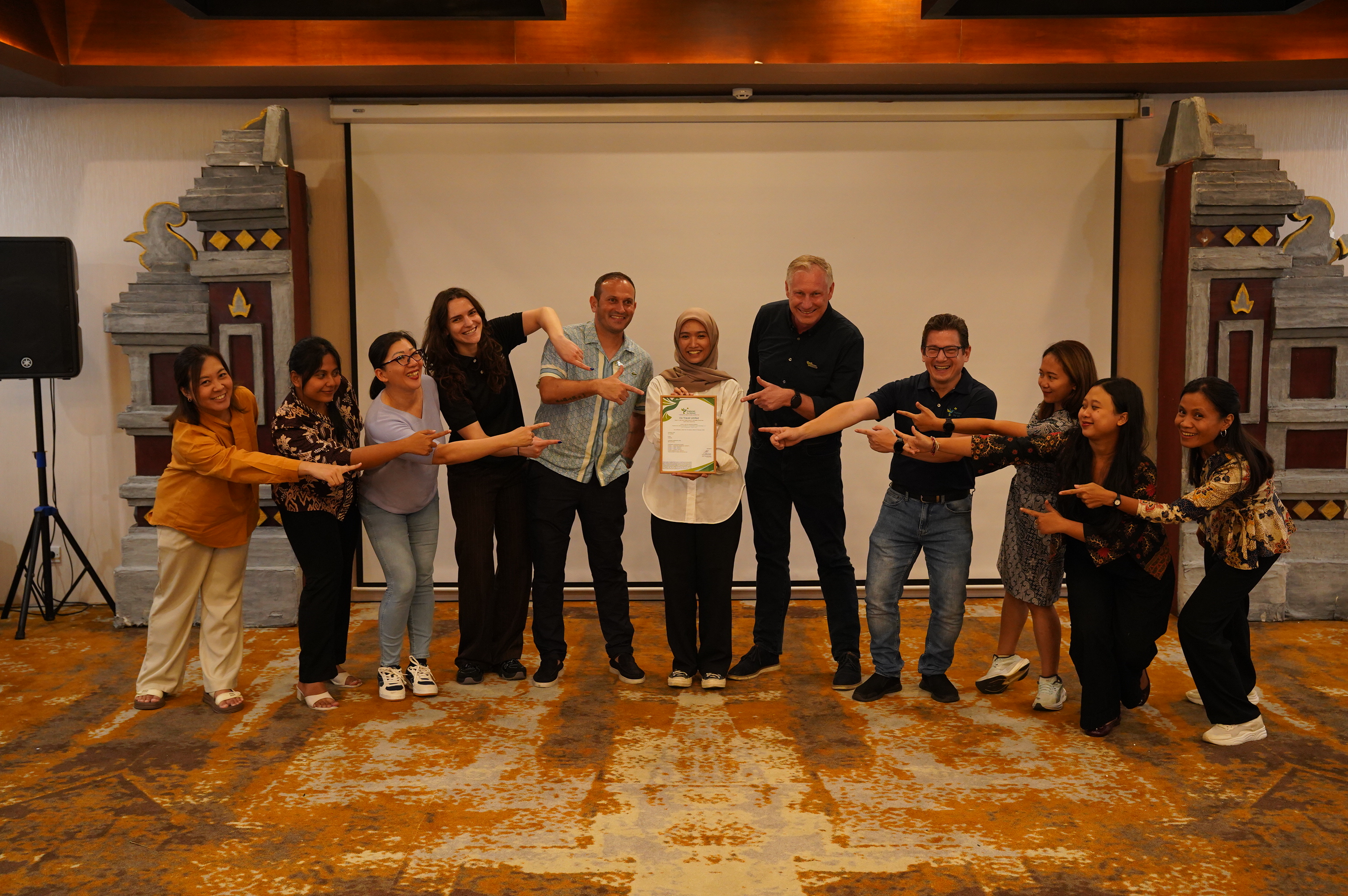
How Vio Travel Got Certified
Vio Travel pursued certification under the Preferred by Nature Standard for Sustainable Travel Activities, a GSTC-recognised standard built on four core pillars: responsible management, people, nature, and climate.
Their Indonesian operations were the first to undergo the process, with an independent third-party audit confirming full compliance. Vio’s sustainability coordinator led the work by translating the company's existing values into the documented frameworks required by the standard.
Other country offices are set to follow. The Indonesian certification was not the end of the journey, rather it’s the model for the rest.
1. It replaces "trust me" with independently verified proof.
The single biggest shift certification gives you is credibility you don't have to argue for.
Vio Travel describes its certification as a milestone in a region where responsible tourism has historically been self-reported, and that framing is the whole point. Instead of asking a client to believe your sustainability claims, you hand them an audited outcome.
Novita Rosiana Dewi, Sustainability Coordinator at Vio Travel, reflected on what the process revealed: "We already had a lot of these practices and aspects in place, but it was more informal. Now that the system is in place, it makes us more thoughtful and mindful in our daily operations."
That is the shift independent certification delivers. Not a transformation of who you are, but a structured, verifiable expression of what you already do embedded into how the business runs every day.
2. It answers the ESG questions your corporate buyers are already asking.
If you sell to agents, wholesalers, or corporate travel programmes, this benefit is immediate.
Many travel companies now operate under ESG reporting frameworks that require documented sustainability standards from their key suppliers. Certification provides audited, third-party-verified evidence that directly meets that requirement. When a B2B partner needs to show their own board or clients that their supply chain is responsible, a certified supplier makes their compliance story straightforward.
Without independent verification, suppliers increasingly become less competitive than those able to demonstrate credible, verified sustainability performance. This gap tends to widen as buyer expectations rise.
3. It's a framework you can actually implement, not an ideal.
One concern that keeps many providers from pursuing certification is that "sustainability" feels too broad to act on. Vio Travel's experience suggests the opposite.
The Standard for Sustainable Travel Activities is built on the Preferred by Nature Sustainability Framework with four core principles supported by 31 criteria. It covers responsible management and business practices, respect for people's wellbeing and human rights, protection of nature and the environment, and the reduction of climate impacts. The framework provides a tangible, working structure. You know exactly what to document, what to strengthen, and where you stand.
Vio’s sustainability coordinator led the process by translating the company's existing values into the documented frameworks required by the standard, making the abstract practical and the practical verifiable.
As Michael Lynden-Bell put it, "The most challenging part has been balancing ambition with practicality. We now focus on embedding these standards across all of our destinations, continuing to strengthen relationships with our suppliers in a sustainable way."
That balance between ambition and practicality, between commitment and continuous improvement is precisely what the standard is designed to support.
4. For many providers, it validates what you already do.
This is perhaps the most reassuring lesson for operators already running responsibly.
Vio Travel's own team described the milestone not as a change in how they operate, but as formal recognition of practices already embedded in the business. Certification, in this sense, is about demonstrating credible performance, not claiming perfection. It gives structure and visibility to commitments that were already real.
If you already source from local suppliers, respect community and labour standards, and manage your environmental footprint, certification largely turns existing behaviour into documented, provable evidence. The work is often about organising and recording what you already do.
Dominik Schaufler, Co-CEO and Co-Founder of Vio Travel, described the broader shift this created: "Another very important part here is clear sustainability guidelines given out to the partners we work with, and overall improved monitoring and documentation that we've implemented to work with passionate, locally rooted partners and focusing on long-term impact.”
5. It connects you to multiple recognised initiatives.
The value of this certification stacks, because it plugs into several credibility systems at once.
Beyond GSTC's recognition of the Standard and PBN's accreditation as a Certification Body, this certification has also passed independent review by Travalyst, the coalition backed by players including Booking.com, Expedia Group, Google, Skyscanner, Trip.com, Tripadvisor, and Visa. Plus, they’re now listed among its approved sustainability certifications.
One audit process with recognition across multiple globally-trusted frameworks and platforms. For a regional provider, that is an efficient way to build credibility with the widest possible set of buyers and partners without going through separate processes for each.
6. It gets you listed where the bookings actually happen.
Certification is not just a mark of credibility. It also functions as a distribution channel.
As a GSTC-accredited Certification Body, Preferred by Nature gives certified companies access to the GSTC Market Access Programme, managed by the platform BeCause.
This programme channels active certificate listings to major industry organisations, including Booking.com, Agoda, Google Hotels, TUI, Transat, and Hotelbeds. The certification effectively puts organisations in front of conscientious consumers and partners worldwide through channels that self-reported sustainability claims cannot access.
7. It turns practices you already have into go-to status
Vio Travel is the first DMC in Asia to earn Preferred by Nature certification under the Standard for Sustainable Travel Activities, with its Indonesia operations leading and other country offices set to follow.
This milestone matters because independently verified sustainability is not yet widespread across the region. The field of PBN-certified providers in Southeast Asia is almost entirely open. For DMCs already doing the right things, getting certified translates existing good practice into a visible, verifiable commitment. It’s a commitment that builds in value as the market continues to develop.
Dominik Schaufler described the road ahead: "Our roadmap is clear: to progressively extend this sustainability framework across our network, applying the same rigorous standards that earned certification in Indonesia."
Continuous improvement is built into that approach. The goal was never simply to obtain a certificate. It was to strengthen the organisation and demonstrate its commitment in a way that withstands independent scrutiny and continues to improve over time.
So, where does this leave you?
Vio Travel's journey shows what's possible when a company decides to turn good practice into a provable commitment. For a business already doing the right things, certification is less a transformation than a translation, giving credibility and visibility to what was already real.
“Vio Travel’s journey demonstrates that many tourism businesses in Asia are already doing remarkable work to operate responsibly. Independent certification isn’t about changing who they are, it’s about giving credibility and visibility to that commitment. We hope this story encourages other tourism businesses across the region to take the next step and demonstrate their sustainability performance through independent verification.” said Saúl Blanco Sosa, Director, Sustainable Travel Programme at Preferred by Nature.
Dominik Schaufler added: "So we try to influence our partner network in a way where we act as a facilitator, but also like a catalyst in setting expectations, sharing best practices and encouraging them for continuous improvement across our partner network. I see a lot of passion and I see a lot of motivation and a lot of partners show interest in developing their knowledge in this regard and we are here to help them."
The opportunity across Southeast Asia remains wide open. Few DMCs and tour operators in the region hold this kind of independent certification, buyer demand is rising, and the platforms where bookings happen are increasingly filtering by verified credentials.
Ultimately, building a more responsible tourism sector is a shared journey, built on trust, independent verification, continuous improvement, and collaboration for people, nature, and climate.
Read the Spanish version here.
About Preferred by Nature
Is an international mission-driven organization working to support sustainable land use and responsible supply chains across the world, partnering with farmers, foresters, businesses, NGOs, and governments to promote better land management and business practices that benefit people, nature, and climate in more than 100 countries. As part of this work, Preferred by Nature developed the Sustainable Travel Programme (STP), through which the Standard for Sustainable Travel Activities helps tourism businesses improve and communicate their environmental, social, and economic practices.
Preferred by Nature is a GSTC-accredited Certification Body and the Preferred by Nature Standard for Sustainable Travel Activities is a GSTC-Recognised Standard.
For more information, visit here.


Have a question? Contact us.
