Turning the tide: Mobilising cocoa communities against galamsey destruction for long-term livelihoods and health
Cocoa is a cornerstone of Ghana’s economy. As the world’s second-largest producer, it is a major source of foreign exchange and supports around 800,000 smallholder farmers, alongside extension officers, private cocoa companies, licensed buying companies, and COCOBOD staff. Despite its importance, the sector faces mounting pressure from illegal artisanal small-scale mining, known locally as “galamsey”. Beyond destroying cocoa farms and degrading the environment, galamsey creates health risks, exacerbates social inequalities, threatens livelihoods and land access, and erodes community and family cohesion.
This project aims to mobilise communities against galamsey and promote long-term livelihoods and health. It empowers vulnerable cocoa-dependent communities along galamsey frontiers to resist, contain, and reverse its spread, while developing a replicable, community-driven model to address its impacts in rural areas. The initiative is part of a broader cocoa strategy led by Preferred by Nature, in partnership with organisations including Rikolto Ghana, to support smallholder farmers in the overlapping priority cocoa landscape of Western Ghana.
Ghana’s cocoa belt overlaps with the high forest zone and gold-rich regions, creating a cocoa–forest–gold mosaic landscape. This intensifies competition for land and drives land-use changes, often displacing cocoa farms and creating complex challenges for vulnerable, forest-dependent communities. These pressures are compounded by rural poverty, limited alternative livelihoods beyond low-income agriculture, heavy reliance on cocoa, and limited access to knowledge, technology, finance, and markets. Climate change and weak public services further exacerbate the situation.
For many poor farming households, sustainable livelihood options are scarce. While socially and environmentally harmful, galamsey is often seen as an immediate way out of poverty, drawing entire households, including children. Once introduced, galamsey spreads quickly, causing environmental damage and deep social divisions. Cocoa buying companies may withdraw from affected communities, further entrenching poverty and instability.
The project primarily benefits cocoa farmers, including farmer groups, and cocoa-dependent communities in Western Ghana. It will directly reach 3,000 smallholders and their households across 12 communities in three districts. Women and youth are a central focus, with village savings and loans associations (VSLAs) serving as a key entry point. Community leaders, local government agencies and authorities, cocoa buying companies, and civil society organisations will also benefit through capacity building, knowledge transfer, and collaborative initiatives.
This project contributes to Preferred by Nature’s broader objective of promoting sustainable cocoa production in Ghana, specifically by addressing galamsey in cocoa-growing areas. Its objectives are to:
- Mobilise communities, traditional and public authorities, NGOs, and the private sector to build an alliance against galamsey and strengthen policy enforcement.
- Demonstrate competitive short-term income models, through citronella cultivation and processing, to increase farm earnings.
- Introduce longer-term strategies to reverse the impact of galamsey, including agroforestry-based phytoremediation, benefiting ‘galamsey-free’ communities.
By showcasing effective ways to halt galamsey, the project encourages cocoa buying companies to maintain engagement and invest in affected communities.
The project adopts multiple pathways to address galamsey and strengthen community resilience. Communities will receive advocacy training, and traditional authorities will be engaged to manage land tenure, especially in post-galamsey contexts. Alternative livelihoods are promoted, including short-term options such as citronella production with value addition, alongside long-term agroforestry-based solutions.
Farmer organisations and local entrepreneurship will be strengthened, and stepwise, competitive production models will be developed to offer viable alternatives to galamsey, alongside approaches for land reclamation. The project also engages the private sector and local authorities to invest in communities, support resistance efforts, and restore degraded lands. Civil society will receive capacity building on pollution control and land reclamation techniques.
Expected outcomes
The project aims to achieve the following outcomes:
- Communities actively protect and restore their landscapes from past, present, and future galamsey activities.
- Agricultural productivity and diversified income sources provide sustainable, attractive alternatives to galamsey for farmers and communities.
- Public and private sector stakeholders collaborate with communities to support local resistance to galamsey and accelerates environmental and economic recovery.
Impact
Overall, the project ensures that cocoa-dependent communities and smallholders have a collective model to organise and effectively resist illegal gold mining without compromising their health or livelihoods. By strengthening resilience, diversifying income, and restoring degraded land, the initiative supports sustainable cocoa production and healthier, more stable rural communities.


Project Details:
Title
Turning the tide: Mobilising cocoa communities against galamsey destruction for long-term livelihoods and health
Padmore Boateng Ansah
Together we are stronger
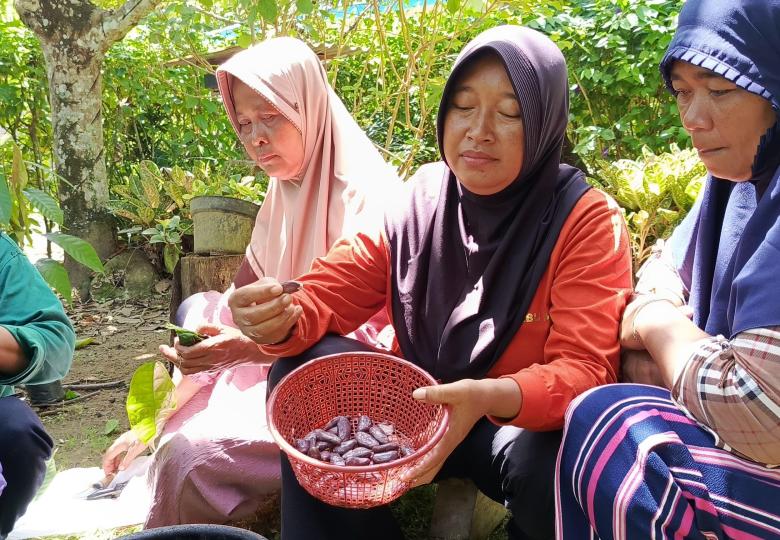
Introducing climate-smart cocoa farming among smallholders for ecosystem-based adaptation in La...
Preferred by Nature has partnered with Rikolto Indonesia to implement the project ”Introducing climate-smart cocoa farming among s...
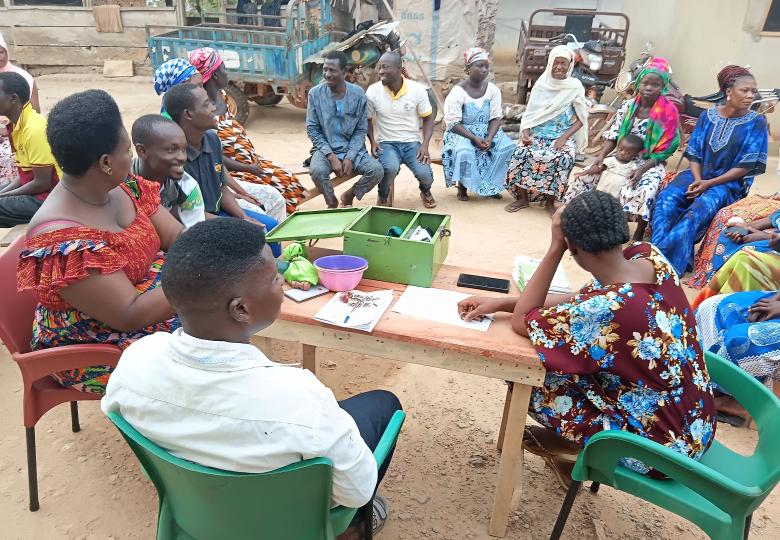
Raising the social and environmental bar for sustainable cocoa production in West Africa
West Africa produces around 70% of the world’s cocoa. Ghana, the second-largest producer, contributes 20–25% of global supply and ...
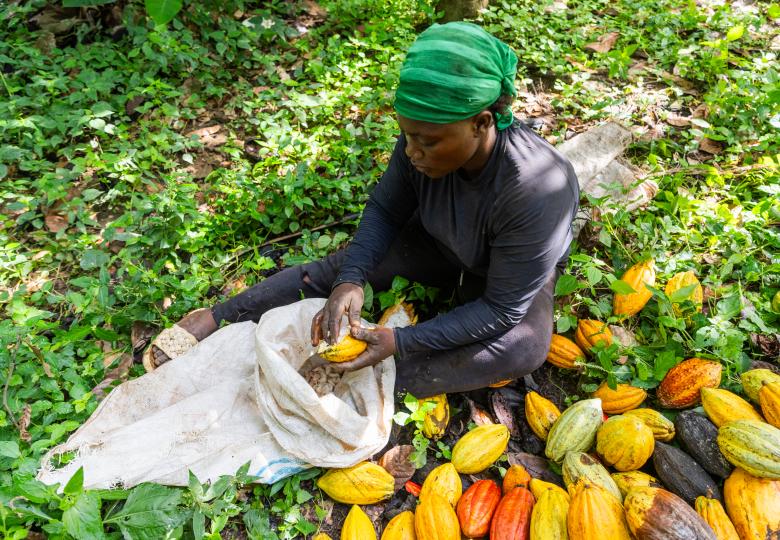
Turning the tide: Mobilising cocoa communities against galamsey destruction for long-term livel...
Cocoa is a cornerstone of Ghana’s economy. As the world’s second-largest producer, it is a major source of foreign exchange and su...
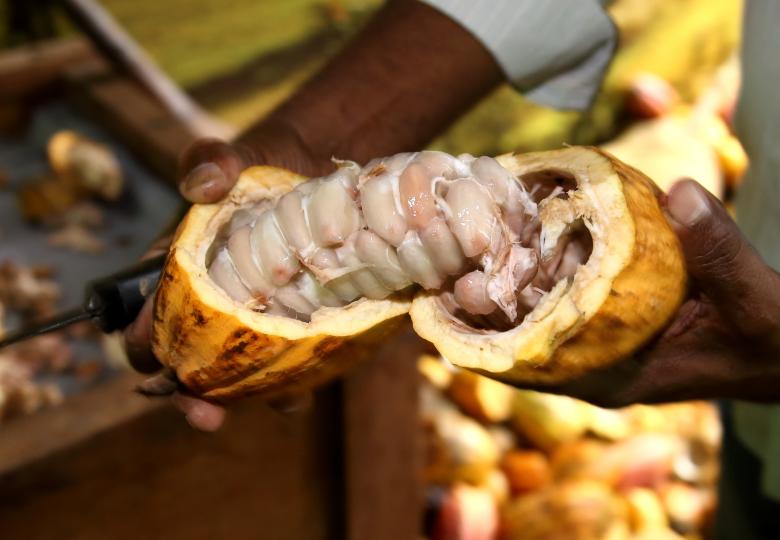
Community-based Adaptation to Climate Change and Advocacy in Wassa Amenfi West, Ghana
The "Community-based Adaptation to Climate Change and Advocacy in Wassa Amenfi West, Ghana" project focuses on strengthening resil...