The numbers are getting better. The forests are still disappearing.
Sitting in a conference hall in Amsterdam this June, I had the distinct sensation of being on a very fast train. At the Innovation Forum's climate event on 16 and 17 June, panel after panel traced the same arc: rules and regulations in the sustainability space are becoming more complex, more detailed, more rigorous. This is, on balance, good news. Tighter standards are what allow a claim about carbon removals to mean something rather than nothing.
But there's always a but. And the but that kept surfacing in my mind was this: are we spending so much energy getting the numbers right that we've lost sight of the action itself?
The measurement trap
More and more institutional effort now goes into accounting - verifying, disclosing, aligning with the latest guidance document. All of this matters. None of it, on its own, reduces a single tonne of emissions on the ground. We cannot afford to wait for the next standard to be published before we act. The climate does not pause while we perfect our methodology.
This tension crystallized for me around a term that came up repeatedly in Amsterdam: beyond-value-chain mitigation, or BVCM. It's a technical-sounding phrase for a simple, urgent idea — that reducing emissions within your own supply chain is no longer enough. Companies and nations also need to invest in emission reductions and removals outside their direct value chains, because the crises we're trying to solve, deforestation chief among them, don't respect the boundaries of a corporate carbon inventory.
What I saw in Rokan Hulu
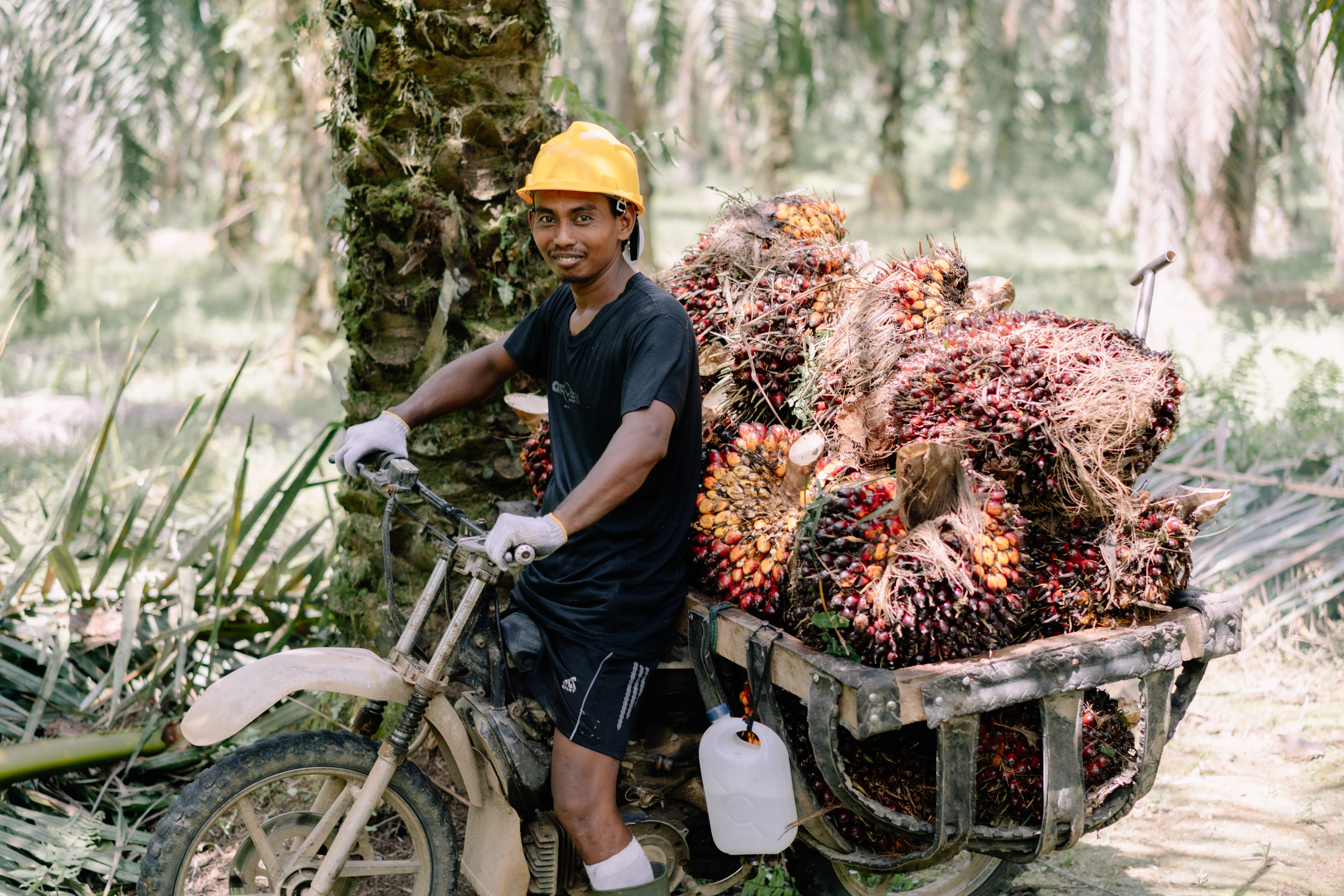
My thinking on this sharpened considerably after a week spent with smallholder palm oil farmers in Rokan Hulu, Indonesia, shortly before the forum. These are farmers being trained to improve environmental and social conditions on their land, including climate mitigation practices. Some have reached the point of growing palm oil without synthetic fertilizer at all - a genuine achievement, and a reminder that palm oil, land-efficient as it is compared with other vegetable oil crops, can be produced far more responsibly than its reputation suggests.
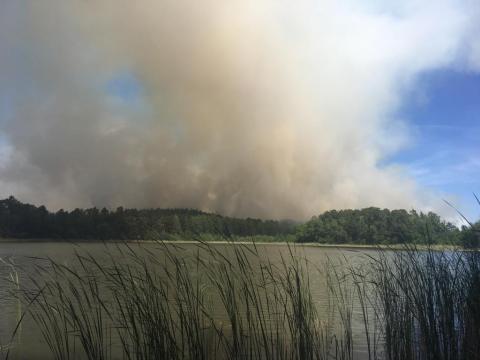
And yet one devastating problem persists: global demand for vegetable oil keeps driving deforestation, even where large buyers have deforestation-free policies on paper. Studies show that land-use change accounts for more than 90% of total emissions from oil crop production. This is not a marginal factor to be offset elsewhere - it is the headline number. If a company's policy stops deforestation on its own plantations but the wider system keeps clearing forest to meet demand, the policy has succeeded and the planet has still lost.
Why does this keep happening despite good intentions? Because policies without full traceability and on-the-ground engagement are promises, not proof. Real change requires buyers to demand traceability all the way to the plot of land, and to work with producers, industry bodies, and cross-sector coalitions who can verify what's actually happening in the field - not just what's stated in a supplier questionnaire.
Leakage: the problem hiding behind good news
Even companies that do this well can inadvertently cause harm elsewhere, through a mechanism the industry calls leakage. Push for higher yields to avoid clearing new land, and you risk monoculture and biodiversity loss. Tighten your own sourcing standards, and the suppliers you drop don't disappear - they sell to someone else. If that someone else has weaker traceability and looser deforestation requirements, the forest gets cleared anyway; the emissions simply move to a buyer with lower standards. A company can hit net zero on paper while the global system it operates within keeps losing forest.
This is precisely why individual corporate ambition, however sincere, is not sufficient. The recently published Land Sector and Removals Standard is a welcome step toward consistent, rigorous requirements across the board. But the standard is only as good as the traceability and on-the-ground verification behind it. Rules on paper and boots on the ground must move together.
Where the leverage really sits
The financial sector has an outsized role to play here, and not only through exclusionary requirements. Making deforestation-free sourcing a hard condition of finance matters, but so does actively incentivizing efforts that go beyond a single value chain - funding landscape-level and jurisdictional approaches that protect entire regions, not just the plots a single company happens to buy from.
Ultimately, nations and companies alike need to shift their frame of reference. The goal cannot simply be "my value chain reaches net zero." It has to be "the landscapes and nations I depend on remain forested." That is a bigger, harder, more collective ambition - and it is the only one that actually matches the scale of the problem.
The regulatory train is moving fast, and it should keep moving. But speed on paper means little if the chainsaws on the ground don't slow down too. It is urgent. It is imperative.
Photos courtesy: Rokan Hulu project/Preferred by Nature
How Preferred by Nature supports climate and forest action
Turning climate and deforestation commitments into meaningful outcomes requires more than reporting and compliance. Preferred by Nature helps organizations move from ambition to implementation through certification, capacity building, and tailored advisory services. Whether the goal is strengthening traceability, reducing deforestation risk, advancing climate action, or demonstrating credible progress, we support organizations at every stage of their sustainability journey.
Our services include:
- Developing climate, forest, and responsible sourcing strategies aligned with regulatory requirements, science-based approaches, and leading sustainability frameworks.
- Strengthening traceability and due diligence systems to identify, manage, and mitigate deforestation risks across supply chains.
- Building supplier and producer capacity, including support for smallholders to adopt more sustainable and climate-resilient practices.
- Supporting climate action implementation through GHG accounting, emissions reduction strategies, and landscape-level approaches that address the root causes of deforestation.
- Providing certification and independent assurance through Preferred by Nature's Sustainability Framework and other certification programmes that help demonstrate responsible sourcing, traceability, and sustainable land management.
Contact us to explore how we can help advance your climate and forest goals.