system_breadcrumb_block
system_main_block

Nařízení EU proti odlesňování (EUDR)

quicktabs_block:service_certificate_lists

Na této stránce najdete podrobný přehled nařízení EU proti odlesňování (EUDR), včetně jeho působnosti, harmonogramu, požadavků na náležitou péči a nejnovějších změn. Je určena organizacím a odborníkům, kteří chtějí lépe porozumět tomu, jak EUDR funguje v praxi a jak se jeho požadavky postupně vyvíjejí.

 
Přejít na konkrétní část:


Co je EUDR?

Nařízení EU proti odlesňování (EUDR) má za cíl omezit podíl EU na celosvětovém odlesňování a znehodnocování lesů prostřednictvím pravidel pro uvádění vybraných zemědělských a lesnických komodit na trh a jejich vývoz. Zavádí povinné požadavky na náležitou péči, které mají zajistit, aby příslušné produkty:

  • nebyly spojeny s odlesňováním ani znehodnocováním lesů po 31. prosinci 2020;
  • byly vyprodukovány v souladu s právními předpisy země produkce.

V prosinci 2025 se EU dohodla na změnách EUDR. Ty zahrnují odklad uplatňování nařízení o jeden rok a úpravu povinností pro některé navazující subjekty a mikropodniky a malé podniky v roli primárních hospodářských subjektů.


Proč bylo EUDR zavedeno

EUDR reaguje na souvislost mezi rozšiřováním zemědělské půdy, znehodnocováním lesů, změnou klimatu a úbytkem biologické rozmanitosti.

V letech 1990 až 2020 bylo v důsledku odlesňování ztraceno 420 milionů hektarů lesů. (FAO)


Zemědělství a lesnictví se podílejí přibližně 23 % na emisích skleníkových plynů způsobených lidskou činností, přičemž samotná zemědělská produkce představuje zhruba 12 %. (IPCC)

 
Odlesňování je příčinou přibližně 11 % emisí skleníkových plynů. (IPCC)


EUDR se zaměřuje na tyto příčiny a snaží se tak omezit dopady spotřeby v EU na životní prostředí.


Na koho se EUDR vztahuje?

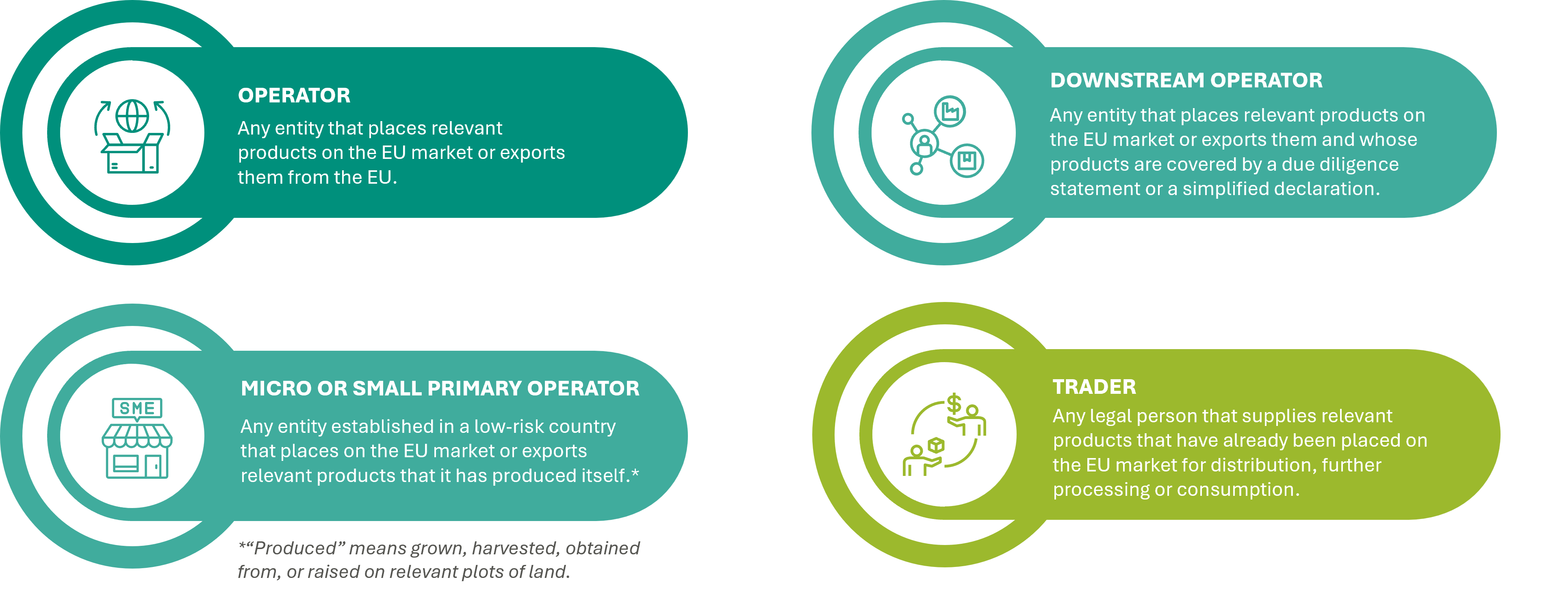
EUDR se vztahuje na hospodářské subjekty, navazující hospodářské subjekty a obchodníky, kteří uvádějí relevantní komodity nebo produkty z nich vyrobené na trh EU nebo je z EU vyvážejí. Mezi tyto komodity patří sója, skot, palma olejná, dřevo, kakao, káva a přírodní kaučuk.

Tyto subjekty musí být schopny doložit, že produkty nepocházejí z půdy, která byla nedávno odlesněna, nepřispívají ke znehodnocování lesů a byly vyprodukovány v souladu s příslušnými právními předpisy.
Nejste si jisti, jaké povinnosti pro vás z EUDR vyplývají? Pomůže vám náš bezplatný nástroj pro sebehodnocení.

>> Access our EUDR Scoping Tool


Od kdy se EUDR uplatňuje?

Nařízení se začne uplatňovat od 30. prosince 2026 na velké a střední podniky. Pro hospodářské subjekty, které před 30. prosincem 2024 splňovaly kritéria malého podniku nebo mikropodniku, platí za určitých podmínek prodloužená lhůta do 30. června 2027. Toto prodloužení:

  • se nevztahuje na navazující hospodářské subjekty ani obchodníky;
  • se nevztahuje na produkty ze dřeva, na které se dříve vztahovalo nařízení EU o dřevě (EUTR).

Co se stane s EUTR?

Jakmile se EUDR začne uplatňovat, nahradí nařízení EU o dřevě (EUTR). Na některé produkty ze dřeva se však EUTR bude nadále vztahovat během tříletého přechodného období, pokud:

  • bylo dřevo vytěženo před vstupem EUDR v platnost (29. června 2023); a
  • produkt je uveden na trh EU v den, kdy se EUDR začne uplatňovat (30. prosince 2026), nebo později.


Komodity a produkty, na které se EUDR vztahuje
Soy
Cattle
Palm oil
Wood
Cocoa
Coffee
Rubber

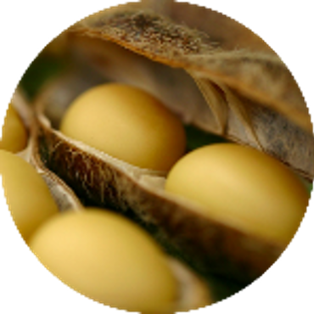
EUDR se vztahuje na sedm komodit, které EU vybrala s ohledem na míru jejich spotřeby a riziko odlesňování: sóju, skot, palmu olejnou, dřevo, kakao, kávu a přírodní kaučuk.

Pro každou z těchto komodit stanoví nařízení konkrétní produkty, na které se EUDR vztahuje, prostřednictvím celních kódů EU uvedených v příloze I EUDR. Produkty, které v příloze I EUDR uvedeny nejsou, obecně nespadají do působnosti nařízení.

V červenci 2026 přijala Evropská komise nařízení v přenesené pravomoci, kterým upravila rozsah produktů spadajících pod EUDR. Tyto změny jsou zohledněny v tabulce níže.

*Na produkt se EUDR začne vztahovat až od 30. prosince 2027.

Relevant commodity Relevant products


Cattle

This Regulation only applies to cattle of the genus Bos and its sub-generas: Bos, Bibos, Novibos, and Poephagus falling under HS subheadings 0102 21 and 0102 29. It does not apply to buffalo (Syncerus genus) or bison (Bison genus) or any other live bovine animals.

  • ex 0102 Live cattle
  • ex 0201 Meat of cattle, fresh or chilled
  • ex 0202 Meat of cattle, frozen
  • ex 0206 10 Edible offal of cattle, fresh or chilled
  • *ex 0206 21 00 Frozen cattle tongues
  • ex 0206 22 Edible cattle livers, frozen
  • ex 0206 29 Edible cattle offal (excluding tongues and livers), frozen
  • ex 1602 50 Other prepared or preserved meat, meat offal, blood, of cattle


Cocoa

  • 1801 Cocoa beans, whole or broken, raw or roasted
  • 1802 Cocoa shells, husks, skins and other cocoa waste (not including waste as defined in Article 3, point (1) of Directive 2008/98/EC)
  • 1803 Cocoa paste, whether or not defatted
  • 1804 Cocoa butter, fat and oil
  • 1805 Cocoa powder, not containing added sugar or other sweetening matter
  • 1806 Chocolate and other food preparations containing cocoa


Coffee

  • 0901 Coffee, whether or not roasted or decaffeinated; coffee husks and skins; coffee substitutes containing coffee in any proportion
  • *2101 11 00 Extracts, essences, and concentrates of coffee


Oil Palm

This Regulation applies to oil palm of Elaeis spp. (including Elaeis guineensis). It does not apply to babassu oil from genus Attalea spp. (including Attalea speciosa) and other vegetable oils from other palm tree species.

  • ex 1207 10 Palm nuts and kernels
  • ex 1511 Palm oil and its fractions, whether or not refined, but not chemically modified (not including waste as defined in Article 3, point (1), of Directive 2008/98/EC)
  • ex 1513 21 Crude palm kernel and babassu oil and fractions thereof, whether or not refined, but not chemically modified (not including waste as defined in Article 3, point (1), of Directive 2008/98/EC)
  • ex 1513 29 Palm kernel and babassu oil and their fractions, whether or not refined, but not chemically modified (excluding crude oil) (not including waste as defined in Article 3, point (1), of Directive 2008/98/EC)
  • *ex 1516 20 Palm, palm kernel and babassu oils and their fractions, partly or wholly hydrogenated, inter-esterified, re-esterified or elaidinised, whether or not refined, but not further prepared (not including products to the extent they are used in the manufacturing of  medicinal products for human or veterinary use within the scope of Directive  2001/83/EC of the European Parliament and of the Council, Regulation (EC)  No 726/2004 of the European parliament and of the Council, or Regulation  (EU) 2019/6 of the European Parliament and of the Council)*
  • *ex 1518 00 Palm, palm kernel and babassu oils and their fractions boiled, oxidised, dehydrated, sulphurised, blown, polymerised by heat in vacuum or in inert gas or otherwise chemically modified, excluding those of heading 1516; inedible mixtures or preparations of animal, vegetable or microbial fats or oils or of fractions of different fats or oils of this chapter, that contain or have been made using oil palm (not including waste as defined in Article 3, point (1), of Directive 2008/98/EC)
  • *ex 1520 00 Crude glycerol, glycerol waters and lyes that have been produced using oil palm
  • ex 2306 60 Oilcake and other solid residues of palm nuts or kernels, whether or not ground or in the form of pellets, resulting from the extraction of palm nut or kernel fats or oils
  • *ex 2905 16 Octanol (octyl alcohol) and isomers thereof, that have been synthesized using oil palm
  • *ex 2905 17 00 Dodecan-1-ol (lauryl alcohol), hexadecan-1-ol (cetyl alcohol) and octadecan-1-ol (stearyl alcohol), that have been synthesized using oil palm (not including products to the extent they are used in the manufacturing of medicinal products for human or veterinary use within the scope of Directive 2001/83/EC, Regulation (EC) No 726/2004 or Regulation (EU) 2019/6)
  • *ex 2905 19 00 Other saturated monohydric alcohols, not elsewhere specified or included, that have synthesized using oil palm
  • ex 2905 45 Glycerol, with a purity of 95 % or more (calculated on the weight of the dry product), that has been synthesized using oil palm (not including products to the extent they are used in the manufacturing of medicinal products for human or veterinary use within the scope of Directive 2001/83/EC, Regulation (EC) No 726/2004 or Regulation (EU) 2019/6)
  • *ex 2915 39 Esters of acetic acid, other than ethyl acetate, vinyl acetate, n-butyl acetate and dinoseb (ISO) acetate, that have been synthesized using oil palm
  • ex 2915 70 Palmitic acid, stearic acid, their salts and esters that have been synthesized using oil palm (not including products to the extent they are used in the manufacturing of medicinal products for human or veterinary use within the scope of Directive 2001/83/EC, Regulation (EC) No 726/2004 or Regulation (EU) 2019/6)
  • ex 2915 90 Saturated acyclic monocarboxylic acids, their anhydrides, halides, peroxides and peroxyacids; their halogenated, sulphonated, nitrated or nitrosated derivatives, other than formic acid, its salts and esters, acetic acid and its salts; acetic anhydride, esters of acetic acid, mono-, di- or trichloroacetic acids, their salts and esters, propionic acid, its salts and esters that have been synthesized using oil palm, butanoic acids, pentanoic acids, their salts and esters and palmitic acid, stearic acid, their salts and esters, that have been synthesized using oil palm (not including products to the extent they are used in the manufacturing of medicinal products for human or veterinary use within the scope of Directive 2001/83/EC, Regulation (EC) No 726/2004 or Regulation (EU) 2019/6)
  • *ex 2916 15 Oleic, linoleic, linolenic acids, their salts and esters that have been synthesized using oil palm
  • *ex 2916 19 10 Undecenoic acids, its salts and esters that have been synthesized using oil palm
  • *ex 2921 19 Acyclic monoamines and their derivatives; salts thereof, other than methylamine, di- or trimethylamine and their salts, 2-(N,N-dimethylamino)ethylchloride hydrochloride, 2-(N,N-diethylamino)ethylchloride hydrochloride and 2-(N,N-diisopropylamino)ethylchloride hydrochloride, that have been synthesized using oil palm (not including products to the extent they are used in the manufacturing of medicinal products for human or veterinary use within the scope of Directive 2001/83/EC, Regulation (EC) No 726/2004 or Regulation (EU) 2019/6)u
  • *ex 2923 90 00 Quaternary ammonium salts and hydroxides, other than choline and its salts, tetraethylammonium perfluorooctane sulphonate and didecyldimethylammonium perfluorooctane sulphonate, that have been synthesized using oil palm (not including products to the extent they are used in the manufacturing of medicinal products for human or veterinary use within the scope of Directive 2001/83/EC, Regulation (EC) No 726/2004 or Regulation (EU) 2019/6)
  • *ex 2924 19 00 Acyclic amides, carbamates and their salts, other than meprobamate (INN), fluoroacetamide (ISO), monocrotophos (ISO) and phosphamidon (ISO), that have been synthesized using oil palm (not including products to the extent they are used in the manufacturing of medicinal products for human or veterinary use within the scope of Directive 2001/83/EC, Regulation (EC) No 726/2004 or Regulation (EU) 2019/6)
  • *ex 3401 11 00 Soap in the form of bars, cakes, moulded pieces or shapes for toilet use (including medicated products), that contain or have been made using oil palm (not including products to the extent they are used in the manufacturing of medicinal products for human or veterinary use within the scope of Directive 2001/83/EC, Regulation (EC) No 726/2004 or Regulation (EU) 2019/6)
  • *ex 3401 20 Soap in forms other than bars, cakes, moulded pieces or shapes, that contain or have been made using oil palm
    ex 3823 11 Stearic acid, industrial that has been synthesized using oil palm (not including products to the extent they are used in the manufacturing of medicinal products for human or veterinary use within the scope of Directive 2001/83/EC, Regulation (EC) No 726/2004 or Regulation (EU) 2019/6)
  • ex 3823 12 Oleic acid, industrial that has been synthesized using oil palm (not including products to the extent they are used in the manufacturing of medicinal products for human or veterinary use within the scope of Directive 2001/83/EC, Regulation (EC) No 726/2004 or Regulation (EU) 2019/6)
  • ex 3823 19 Industrial monocarboxylic fatty acids; acid oils from refining excluding stearic acid, oleic acid and tall oil fatty acids that have been synthesized using oil palm (not including waste as defined in Article 3, point (1), of Directive 2008/98/EC)
  • ex 3823 70 00 Industrial fatty alcohols that have been synthesized using oil palm
  • *ex 3824 99 Other chemical products and preparations of the chemical or allied industries (including those consisting of mixtures of natural products), not elsewhere specified or included, that contain or have been made using oil palm (not including products to the extent they are used in the manufacturing of medicinal products for human or veterinary use within the scope of Directive 2001/83/EC, Regulation (EC) No 726/2004 or Regulation (EU) 2019/6)
  • *ex 3907 29 Other polyethers in primary forms, other than bis(polyoxyethylene) methylphosphonate, that have been made using oil palm (not including products to the extent they are used in the manufacturing of medicinal products for human or veterinary use within the scope of Directive 2001/83/EC, Regulation (EC) No 726/2004 or Regulation (EU) 2019/6)


Rubber

This Regulation applies to rubber of Hevea brasiliensis. It does not apply to balata, gutta-percha, guayule, chicle and similar natural gums produced with other species and to synthetic rubber products.

  • 4001 Natural rubber, balata, gutta-percha, guayule, chicle and similar natural gums, in primary forms or in plates, sheets or strip
  • ex 4005 Compounded rubber, unvulcanised, in primary forms or in plates, sheets or strip
  • ex 4006 Unvulcanised rubber in other forms (e.g. rods, tubes and profile shapes) and articles (e.g. discs and rings)
  • ex 4007 Vulcanised rubber thread and cord
  • ex 4008 Plates, sheets, strips, rods and profile shapes, of vulcanised rubber other than hard rubber (not including used products and second-hand products)
  • ex 4011 New pneumatic tyres, of rubber
  • ex 4012 90 30 Tyre treads
  • ex 4013 Inner tubes, of rubber
  • ex 4015 Articles of apparel and clothing accessories (including gloves, mittens and mitts), for all purposes, of vulcanized rubber other than hard rubber (not including used products and second-hand products)
  • ex 4017 Hard rubber (e.g. ebonite) in all forms including waste and scrap; articles of hard rubber (not including waste as defined in Article 3, point (1) of Directive 2008/98/EC) (not including used products and second-hand products)


Soya

  • 1201 90 00 Soya beans, whether or not broken: other
  • 1208 10 Soya bean flour and meal
  • 1507 Soya-bean oil and its fractions, whether or not refined, but not chemically modified
  • 2304 Oilcake and other solid residues, whether or not ground or in the form of pellets, resulting from the extraction of soya-bean oil


Wood

This Regulation does not apply to bamboo, rattan and other materials of a woody nature and therefore it does also not apply to relevant products listed under the relevant commodity ‘Wood’ to the extent that those products are made of bamboo, rattan and other materials of a woody nature.

  • ex 4401 Fuel wood, in logs, in billets, in twigs, in faggots or in similar forms; wood in chips or particles; sawdust and wood waste and scrap, whether or not agglomerated in logs, briquettes, pellets or similar forms (not including waste as defined in Article 3, point (1) of Directive 2008/98/EC) (not including single use packing material and packing containers used exclusively to support, protect or carry another product made available on the market or exported and presented with that product)
  • ex 4402 Wood charcoal (including shell or nut charcoal), whether or not agglomerated
  • ex 4403 Wood in the rough, whether or not stripped of bark or sapwood, or roughly squared (not including used products and second-hand products)
    ex 4404 Hoopwood; split poles; piles, pickets and stakes of wood, pointed but not sawn lengthwise; wooden sticks, roughly trimmed but not turned, bent or otherwise worked, suitable for the manufacture of walking sticks, umbrellas, tool handles or the like; chipwood and the like (not including used products and second-hand products)
  • ex 4405 Wood wool; wood flour (not including single use packing material and packing containers used exclusively to support, protect or carry another product made available on the market or exported and presented with that product)
  • ex 4406 Railway or tramway sleepers (cross-ties) of wood (not including used products and second-hand products)
  • ex 4407 Wood sawn or chipped lengthwise, sliced or peeled, whether or not planed, sanded or end-jointed, of a thickness exceeding 6 mm (not including used products and second-hand products)
  • ex 4408 Sheets for veneering (including those obtained by slicing laminated wood), for plywood or for other similar laminated wood and other wood, sawn lengthwise, sliced or peeled, whether or not planed, sanded, spliced or end-jointed, of a thickness not exceeding 6 mm
  • ex 4409 Wood (including strips and friezes for parquet flooring, not assembled) continuously shaped (tongued, grooved, rebated, chamfered, V-jointed, beaded, moulded, rounded or the like) along any of its edges, ends or faces, whether or not planed, sanded or end-jointed (not including used products and second-hand products)
  • ex 4410 Particle board, oriented strand board (OSB) and similar board (for example, waferboard) of wood or other ligneous materials, whether or not agglomerated with resins or other organic binding substances (not including used products and second-hand products)
  • ex 4411 Fibreboard of wood or other ligneous materials, whether or not bonded with resins or other organic substances (not including used products and second-hand products)
  • ex 4412 Plywood, veneered panels and similar laminated wood (not including used products and second-hand products)
  • ex 4413 Densified wood, in blocks, plates, strips or profile shapes (not including used products and second-hand products)
  • ex 4414 Wooden frames for paintings, photographs, mirrors or similar objects (not including used products and second-hand products)
  • ex 4415 Packing cases, boxes, crates, drums and similar packings, of wood; cable-drums of wood; pallets, box pallets and other load boards, of wood; pallet collars of wood (not including used products and second-hand products) (not including single use packing material and packing containers used exclusively as packing material to support, protect or carry another product placed on the market and presented with that product) (not including packing material and packing containers clearly suitable for repetitive use used exclusively to support, protect or carry another product made available on the market or exported and presented with that product from the moment they are used for such purpose and onwards)
  • ex 4416 Casks, barrels, vats, tubs and other coopers’ products and parts thereof, of wood, including staves (not including used products and second-hand products) (not including single use packing material and packing containers used exclusively to support, protect or carry another product made available on the market or exported and presented with that product) (not including packing material and packing containers clearly suitable for repetitive use used exclusively to support, protect or carry another product made available on the market or exported and presented with that product from the moment they are used for such purpose and onwards)
  • ex 4417 Tools, tool bodies, tool handles, broom or brush bodies and handles, of wood; boot or shoe lasts and trees, of wood (not including used products and second-hand products)
  • ex 4418 Builders’ joinery and carpentry of wood, including cellular wood panels, assembled flooring panels, shingles and shakes (not including used products and second-hand products)
  • ex 4419 Tableware and kitchenware, of wood (not including used products and second-hand products)
  • ex 4420 Wood marquetry and inlaid wood; caskets and cases for jewellery or cutlery, and similar articles, of wood; statuettes and other ornaments, of wood; wooden articles of furniture not falling in Chapter 94 (not including used products and second-hand products)
  • ex 4421 Other articles of wood (not including used products and second-hand products)
  • ex 47 Pulp of wood (not including used products and second-hand products) (not including recovered (waste and scrap) products and products derived from recovered (waste and scrap) products)
  • ex 48 Paper and Paperboard: Articles of paper pulp, of paper or of paperboard (not including waste as defined in Article 3, point (1) of Directive 2008/98/EC) (not including used products and second-hand products) (not including recovered (waste and scrap) products and products derived from recovered (waste and scrap) products) (not including single use packing material and packing containers used exclusively to support, protect or carry another product made available on the market or exported and presented with that product) (not including packing material and packing containers clearly suitable for repetitive use used exclusively to support, protect or carry another product made available on the market or exported and presented with that product from the moment they are used for such purpose and onwards) (not including items of correspondence and marketing and information materials exclusively accompanying another product made available on the market or exported, or supplied for marketing or information purposes free of charge)
  • ex 9401 31 00 Swivel seats with variable height adjustment, of wood (not including used products and second-hand products)  
  • ex 9401 41 00 Seats other than garden seats or camping equipment, convertible into beds, of wood (not including used products and second-hand products)  
  • ex 9401 61 00 Other seats, with wooden frames, upholstered (not including used products and second-hand products)  
  • ex 9401 69 00 Other seats, with wooden frames, other than upholstered (not including used products and second-hand products)  
    ex 9401 80 00 Other seats, of wood (not including used products and second-hand products)  
  • ex 9401 91 90 Other parts of seats, of wood (not including used products and second-hand products) 9403 30 , 9403 40 , 9403 50 , 9403 60 and 9403 91 Wooden furniture, and parts thereof (not including used products and second-hand products)
  • ex 9406 10 Prefabricated buildings of wood (not including used products and second-hand products)
     

*Na produkt se EUDR začne vztahovat až od 30. prosince 2027.

Poznámka: Předpona „ex“ označuje, že příloha I EUDR zahrnuje pouze část produktů spadajících pod příslušný kód kombinované nomenklatury (KN). Jeden kód může zahrnovat širší skupinu produktů, z nichž do působnosti EUDR spadají pouze některé.

Složené produkty

U produktů vyrobených z více než jedné relevantní komodity se požadavky EUDR vztahují pouze na složku klasifikovanou jako hlavní komodita.

Například u čokoládové tyčinky spadají do působnosti EUDR pouze složky na bázi kakaa.


Produkty, na které se EUDR nevztahuje

Celní kódy EU neuvedené v příloze I EUDR

Produkty s kódem kombinované nomenklatury (KN), který není uveden v příloze I EUDR, nespadají do působnosti EUDR.

Produkty na konci životního cyklu

EUDR se nevztahuje na produkty vyrobené výhradně z materiálu, který dosáhl konce svého životního cyklu a jinak by byl odstraněn jako odpad. Výjimkou jsou případy, kdy je takový materiál vedlejším produktem výrobního procesu, při němž byl použit materiál, který není klasifikován jako odpad ve smyslu čl. 3 bodu 1 směrnice 2008/98/ES.

Obaly

Příloha I EUDR stanoví, že:

  • požadavky na náležitou péči se vztahují na obaly ze dřeva nebo papíru spadající pod kódy KN uvedené v příloze I EUDR, pokud jsou uváděny na trh nebo vyváženy jako samostatný produkt;
  • obaly spadající pod kód KN 4415 jsou z působnosti EUDR vyňaty, pokud slouží výhradně k balení, podpoře, ochraně nebo přepravě jiného produktu uváděného na trh.

Aktualizované často kladené otázky k EUDR dále upřesňují, že:

  • obalový materiál používaný k podpoře, ochraně nebo přepravě jiného produktu nespadá do působnosti EUDR bez ohledu na kód KN, pod který je zařazen; to platí i pro papírové a kartonové obaly (např. KN 4819);
  • návody k použití přiložené k dodávanému zboží nejsou relevantními produkty, pokud nejsou pořizovány samostatně;
  • prodej ani pronájem použitých obalů, například použitých palet, nepodléhá EUDR;
  • prázdné použité obaly, které již k tomuto účelu sloužily a pohybují se v rámci uzavřených oběhových systémů, nespadají do působnosti EUDR;
  • pokud jsou použité obaly opraveny a následně prodány, požadavky na náležitou péči se vztahují pouze na nové relevantní materiály použité při opravě a pro tyto materiály je nutné předložit nové prohlášení o náležité péči (DDS).


Upozornění

Informace a doporučení uvedené na této webové stránce slouží pouze pro informační účely a nepředstavují právní, finanční ani jiné odborné poradenství. Preferred by Nature neposkytuje žádné výslovné ani předpokládané záruky ohledně přesnosti, úplnosti či vhodnosti zde uvedených informací. Nenese odpovědnost za jejich použití ani za rozhodnutí učiněná na jejich základě, včetně případných škod či ztrát, které by v této souvislosti mohly vzniknout. Za dodržování požadavků EUDR a dalších příslušných právních předpisů odpovídá výhradně subjekt, na který se dané právní povinnosti vztahují.

Přejít na konkrétní část:

Odlesňování a znehodnocování lesů

Nařízení stanovuje jasná kritéria pro odlesňování a znehodnocování lesů.

Produkt je považován za „nezpůsobující odlesňování“, pokud neobsahuje relevantní komodity vyprodukované na půdě, která byla odlesněna po 31. prosinci 2020, nebyl z těchto komodit vyroben ani jimi nebyla krmena zvířata, z nichž pochází. „Odlesňováním“ se rozumí přeměna lesa na zemědělsky využívanou půdu bez ohledu na to, zda je způsobena člověkem. U produktů ze dřeva platí další požadavky, které mají zajistit, že těžba po tomto datu nezpůsobila znehodnocování lesů.

„Znehodnocování lesů“ je definováno s využitím terminologie FAO a zahrnuje strukturální změny lesního porostu, například přeměnu původních nebo přirozeně se obnovujících lesů na lesní plantáže.

Soulad s právními předpisy země produkce se posuzuje v osmi oblastech:

  1. práva k užívání půdy;
  2. ochrana životního prostředí;
  3. předpisy týkající se lesů, včetně obhospodařování lesů a ochrany biologické rozmanitosti, pokud přímo souvisejí s těžbou dřeva;
  4. práva třetích stran;
  5. pracovní práva;
  6. lidská práva chráněná mezinárodním právem;
  7. zásada svobodného, předchozího a informovaného souhlasu, včetně zásady stanovené v Deklaraci OSN o právech původních obyvatel;
  8. daňové, protikorupční, obchodní a celní předpisy.

Požadavky na náležitou péči

Organizace, které uvádějí příslušné komodity nebo produkty na trh EU nebo je z EU vyvážejí, jsou považovány za hospodářské subjekty. Ty musí zavést systém náležité péče v souladu s požadavky nařízení. Systém zahrnuje postupy a opatření, jejichž cílem je zajistit, aby produkty nebyly spojeny s odlesňováním a byly vyprodukovány v souladu s právními předpisy země produkce.

Hospodářské subjekty musí shromažďovat informace o dodavatelském řetězci, posuzovat riziko nesouladu a přijímat odpovídající opatření k jeho zmírnění. Produkty lze uvést na trh EU nebo vyvézt pouze tehdy, pokud bylo vyhodnoceno, že z hlediska požadavků na produkci bez odlesňování a v souladu s právními předpisy nepředstavují žádné nebo pouze zanedbatelné riziko.

Zároveň jsou povinny každoročně zveřejňovat informace o provádění náležité péče.

Klasifikace zemí podle rizika a zjednodušená náležitá péče

Evropská komise zavede centralizovanou databázi, v níž budou země na základě ukazatelů odlesňování klasifikovány jako země s nízkým, standardním nebo vysokým rizikem.

Při získávání produktů ze zemí s nízkým rizikem lze uplatnit zjednodušenou náležitou péči. I v takovém případě je však nutné posoudit rizika spojená například s mísením produktů nebo nepřímým získáváním produktů. Rozsah kontrol se bude lišit podle rizikové kategorie dané země.

Přečtěte si naši analýzu klasifikace zemí a jejich rizikových kategorií.


Certifikace a nezávislé ověřování

EUDR připouští, že certifikace a systémy ověřované třetí stranou mohou podpořit posuzování a zmírňování rizik. Nenahrazují však odpovědnost hospodářského subjektu za plnění požadavků nařízení. Při jejich využití je třeba posoudit jejich rozsah, důvěryhodnost a relevanci z hlediska požadavků EUDR.

Rozdílné požadavky podle typu subjektu

Povinnosti vyplývající z EUDR se liší podle velikosti organizace a její role v dodavatelském řetězci.


Hospodářské subjekty

Hospodářské subjekty jsou organizace, které uvádějí příslušné produkty na trh EU nebo je z EU vyvážejí. Patří mezi ně jak organizace, které produkty do EU dovážejí, tak ty, které je v EU produkují, například pěstováním komodit, jako jsou dřevo, káva či sója, nebo chovem skotu.

Podle EUDR jsou povinny vykonávat náležitou péči, aby zajistily, že produkty, které uvádějí na trh, nejsou spojeny s odlesňováním, v případě dřeva ani se znehodnocováním lesů, a že byly vyprodukovány v souladu s příslušnými právními předpisy země produkce.

Pro splnění těchto povinností musí:

  • shromáždit informace požadované podle článku 9 EUDR;
  • na jejich základě posoudit riziko nesouladu s požadavky EUDR s přihlédnutím ke kritériím stanoveným v článku 10;
  • zmírnit všechna zjištěná rizika v souladu s článkem 11.

Pro řádné vykonávání náležité péče musí mít zavedený systém náležité péče. Ten tvoří zdokumentované postupy pro shromažďování informací, posuzování rizik a přijímání opatření k jejich zmírnění.

Jako doklad o vykonání náležité péče musí před uvedením příslušného produktu na trh EU nebo jeho vývozem předložit prohlášení o náležité péči do informačního systému EU.


Mikropodniky a malé podniky jako primární hospodářské subjekty

Mikropodniky a malé podniky jako primární hospodářské subjekty jsou organizace, které uvádějí na trh EU nebo vyvážejí příslušné produkty, jež samy vypěstovaly, sklidily nebo vyprodukovaly v rámci živočišné výroby.

Stejně jako všechny ostatní hospodářské subjekty jsou i tyto subjekty povinny vykonávat náležitou péči, aby zajistily, že jejich produkty nejsou spojeny s odlesňováním a byly vyprodukovány v souladu s příslušnými právními předpisy.

Vzhledem k tomu, že musí být usazeny v zemích klasifikovaných jako země s nízkým rizikem, vztahuje se na ně zjednodušená náležitá péče. Nemusí tedy provádět formální posouzení rizik ani přijímat opatření ke zmírnění rizik. Jejich povinnosti v oblasti náležité péče se zaměřují na shromažďování informací požadovaných podle článku 9 EUDR a na potvrzení souladu se základními požadavky tohoto nařízení.

Tyto subjekty nemusí předkládat prohlášení o náležité péči. Namísto něj mohou do informačního systému předložit zjednodušené prohlášení o náležité péči, které vyžaduje menší rozsah informací než standardní prohlášení o náležité péči.


Navazující hospodářské subjekty a obchodníci

Na navazující hospodářské subjekty a obchodníky se podle EUDR vztahují omezené povinnosti.

Před uvedením příslušného produktu na trh, jeho vývozem nebo dodáním na trh musí shromáždit základní informace o svých dodavatelích, včetně jejich názvu, adresy a e-mailového kontaktu. Pokud je navazující hospodářský subjekt nebo obchodník prvním navazujícím článkem dodavatelského řetězce, tedy pokud je jeho přímým dodavatelem hospodářský subjekt, musí rovněž získat a uchovávat referenční číslo prohlášení o náležité péči nebo identifikátor zjednodušeného prohlášení o náležité péči.

Všechny tyto informace musí být uchovávány po dobu pěti let.

Na navazující hospodářské subjekty a obchodníky, kteří nejsou malými a středními podniky (MSP), se vztahují další požadavky. Musí se zaregistrovat v informačním systému, a pokud se dozvědí o odůvodněných obavách naznačujících možný nesoulad s požadavky EUDR, jsou povinni ověřit, zda původní hospodářský subjekt řádně provedl náležitou péči.


Velikostní kategorie podniků: Podnik nesmí překročit limity alespoň dvou ze tří níže uvedených kritérií. U velkých podniků naopak platí, že musí překročit limity alespoň dvou z těchto tří kritérií:

Mikropodniky

  • bilanční suma: 450 000 EUR
  • čistý obrat: 900 000 EUR
  • průměrný počet zaměstnanců během účetního období: 10

Malé podniky

  • bilanční suma: 5 000 000–7 500 000 EUR
  • čistý obrat: 10 000 000–15 000 000 EUR
  • průměrný počet zaměstnanců během účetního období: 50

Střední podniky

  • bilanční suma: 25 000 000 EUR
  • čistý obrat: 50 000 000 EUR
  • průměrný počet zaměstnanců během účetního období: 250

Velké podniky

  • bilanční suma: 25 000 000 EUR
  • čistý obrat: 50 000 000 EUR
  • průměrný počet zaměstnanců během účetního období: 250
 
Nejste si jisti, zda se EUDR vztahuje i na vaši společnost? Využijte náš nástroj pro sebehodnocení, který vám pomůže zjistit, jaké povinnosti se na vás vztahují.
>>Access our EUDR Scoping Tool


Požadavky na sledovatelnost a geolokační údaje

Hospodářské subjekty musí být schopny vysledovat produkty až k pozemkům, na kterých byly vyprodukovány nebo sklizeny. U pozemků větších než čtyři hektary je nutné uvést geolokační údaje ve formě polygonu. U menších pozemků postačují geolokační údaje ve formě jednoho bodu.

Evropská komise vyvíjí centrální informační systém pro správu prohlášení o náležité péči a souvisejících celních postupů.


Upozornění
Informace a doporučení uvedené na této webové stránce slouží pouze pro informační účely a nepředstavují právní, finanční ani jiné odborné poradenství. Preferred by Nature neposkytuje žádné výslovné ani předpokládané záruky ohledně přesnosti, úplnosti či vhodnosti zde uvedených informací. Preferred by Nature nenese odpovědnost za použití těchto informací ani za rozhodnutí učiněná na jejich základě, včetně případných škod či ztrát, které by v této souvislosti mohly vzniknout. Odpovědnost za dodržování požadavků EUDR a dalších příslušných právních předpisů nese výhradně subjekt, na který se dané právní povinnosti vztahují.


Info sheet
EUDR
EUDR Sustainability Framework Certification EUDR alignment
EUDR Service Info Sheet
Published by 

The EU Deforestation Regulation (EUDR) prohibits products and commodities linked with deforestation and forest degradation from being imported into the EU market or exported from ...
The EU Deforestation Regulation (EUDR) prohibits products and commodities linked with deforestation and forest degradation from being imported into the EU market or exported from ...

16 项行动以符合《欧盟零毁林法案》
Sustainability Framework Certification EUDR alignment EUDR
16 actions to conform with the EU Deforestation Regulation
Published by 

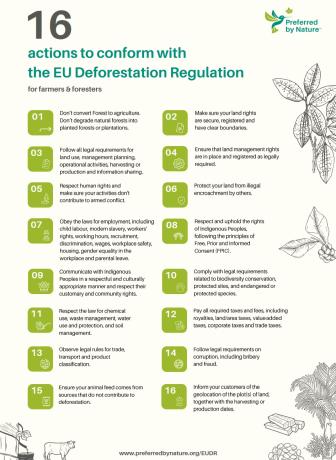
This document outlines actions that farmers and foresters can take to conform with the EU Deforestation Regulation.

This document outlines actions that farmers and foresters can take to conform with the EU Deforestation Regulation.

Template

Guidelines for EUDR Due Diligence System preparation
EUDR
Guidelines for EUDR Due Diligence System preparation
Published by 

This document provides clear instructions and practical steps for preparing Due Diligence Systems (DDS) to meet the requirements of the EU Deforestation Regulation (EUDR). It is d...

This document provides clear instructions and practical steps for preparing Due Diligence Systems (DDS) to meet the requirements of the EU Deforestation Regulation (EUDR). It is d...

Preferred by Nature Certification Standards
PBN-13 EUDR-aligned Indicators v1.5 MAR25
Sustainability Framework Certification EUDR alignment EUDR
Certificación Preferred by Nature - Indicadores alineados con el Reglamento de UE contra la Deforestación
Published by 

Para cumplir estos requisitos, en el caso de los productos agrícolas y los productos de madera, respectivamente, hemos comparado los 157 indicadores incluidos en nuestro Marco par...

Para cumplir estos requisitos, en el caso de los productos agrícolas y los productos de madera, respectivamente, hemos comparado los 157 indicadores incluidos en nuestro Marco par...

pbnc 3
Sustainability Framework Certification Due Diligence System certification EUDR
PBN-03 Due Diligence Standard for Product Conformance
Published by 

Due diligence system requirements including EUDR module, defines requirements for implementing due diligence to ensure product conformance and includes an EUDR-specific module. ...
Due diligence system requirements including EUDR module, defines requirements for implementing due diligence to ensure product conformance and includes an EUDR-specific module. ...

pbnc 2
Sustainability Framework Certification EUDR
PBN-02 Systems Standard
Published by 

Certification system implementation requirements specify the organizational and management system requirements needed to implement and maintain Preferred by Nature Sustainability ...

Certification system implementation requirements specify the organizational and management system requirements needed to implement and maintain Preferred by Nature Sustainability ...

Geospatial Data Sharing Protocol
Cover page
Geospatial Data Sharing Protocol For deforestation-free commodity value chains
Published by 

The Protocol is intended to be a voluntary standard for providing a uniform means for sharing geospatial data. This will allow organisations to exchange geospatial data efficientl...
The Protocol is intended to be a voluntary standard for providing a uniform means for sharing geospatial data. This will allow organisations to exchange geospatial data efficientl...

Frequently Asked Questions (FAQs) - Geospatial Data Sharing Protocol
EUDR
Frequently Asked Questions (FAQs) - Geospatial Data Sharing Protocol
Published by 

This document outlines all the frequently asked questions related to the Geospatial Data Sharing (GDS) Protocol. It aims to provide clarity and understanding for those interested ...

This document outlines all the frequently asked questions related to the Geospatial Data Sharing (GDS) Protocol. It aims to provide clarity and understanding for those interested ...

Consultation comments - Geospatial Data Sharing Protocol
EUDR
Consultation comments - Geospatial Data Sharing Protocol
Published by 

The Geospatial Data Sharing (GDS) Protocol's first version was developed in mid-2023 with FAO's support to improve commodity production monitoring. Following expert group input a...

The Geospatial Data Sharing (GDS) Protocol's first version was developed in mid-2023 with FAO's support to improve commodity production monitoring. Following expert group input a...

Videos

Get in contact with us

Our experts are ready to support you on your sustainability journey.

humming bird
block_content:e7826313-6637-42f2-a55d-4f51ebedf483
field_block:block_content:basic:body

Gain more insights into the programme! 
Join our upcoming courses.

Event title Event type Language Location Dates Status
Klar til de nye krav? Varemærkestandarder, NCR-regler og EUDR Seminar Danish, English Hørning, Denmark 04 -
Event title Event type Language Location Dates Status
ยกระดับข้าวไทยสู่ตลาดโลก: เสริมศักยภาพการแข่งขันด้วย SRP Webinar Thai Online 31 - Completed
Centrale aspekter af FSC™- og PEFC CoC-certificeringerne Seminar Danish Hørning, Denmark 26 - Completed
EUDR stále aktuálně. Jak se připravit na povinnosti nařízení proti odlesňování Webinar Czech Online 25 - Completed
Actualización de Preferred by Nature: normas, regulaciones y novedades para el sector de la madera Webinar Spanish Online 16 - Completed
EUDR atnaujinimų apžvalga: ką reikia žinoti veiklos vykdytojams ir prekiautojams Webinar Lithuanian Online 01 - Completed
Preferred by Nature Updates: Normen, regelgeving en ontwikkelingen voor de houtsector Webinar Dutch Online 01 - Completed
Pengukuran dan Sertifikasi Jejak Karbon Webinar Bahasa Indonesia Online 30 - Completed
Entwaldungsfreie Lieferketten und Umsetzung der EUDR – Seminar in Berlin Seminar German Berlin, Germany 24 - Completed
EUDR w praktyce – aktualne interpretacje i obowiązki dla firm oraz nowe zasady stosowania znaków towarowych FSC Webinar Polish Online 23 - Completed
Comprendre les concepts carbone en agriculture Webinar French Online 18 - Completed
FSC Chain of Custody Expert Course Expert course Simplified Chinese Shanghai, China 16 - Completed
EUDR updates explained: Understanding the latest regulatory updates for Operators and Traders Webinar English Online 09 - Completed
Nature-based Solutions: Ecosystem Restoration and Carbon Projects Training Course Expert course English Cercedilla, Spain 09 - Completed
Centrale aspekter af FSC™- og PEFC CoC-certificeringerne Seminar Hørning, Denmark 03 - Completed
Building deforestation- and conversion-free supply chains under the EUDR Expert course English Hørning, Denmark 27 - Completed
Agriculture Sustainability & Certification in South-east Europe Webinar English Online 18 - Completed
Ecosystem Restoration and Carbon Initiatives: A Practical Course in the Borneo Rainforest Expert course English Sabah, Malaysia 13 - Completed
Canopy + Sustainable Issues Sharing Session Webinar Simplified Chinese Online 08 - Completed
Canopy + 可持续相关议题分享 Webinar Simplified Chinese Online 08 - Completed
Preferred by Nature fait le point : Standards, Réglementations et Évolutions pour la Filière Bois  Webinar French Online 31 - Completed
Preferred by Nature Update: Standards, Regulations and Developments for the Forest Sector Webinar French Online 31 - Completed
线上研讨会:欧盟尽职调查相关法规以及EUDR毁林分析基础工具实践 Webinar Simplified Chinese Online 27 - Completed
Webinar: EU Due Diligence-related Regulations and Practical application of EUDR Deforestation Analysis Foundation Tools Webinar Simplified Chinese Online 27 - Completed
FSC Chain of Custody Expert Course Expert course English Berlin, Germany 24 - Completed
EUDR: Driving Nature-Positive transition Webinar English Online 24 - Completed
FSC Chain of Custody Expert Course Expert course English Montréal, Canada 24 - Completed
SRP Internal Management System Standard and Guidelines (IMS) Online Authorized Training Course Expert course English Online 09 - Completed
SRP Chain of Custody (CoC) Online Authorized Training Course Expert course English Online 09 - Completed
EUDR amendments explained: Exploring the latest changes and revised obligations for Operators and Traders Webinar English Online 28 - Completed
Centrale aspekter af FSC™- og PEFC CoC-certificeringerne Seminar Danish 8362 Hørning, Denmark 28 - Completed
SRP Assurance Scheme (AS) Authorized Training Course Expert course Spanish Treinta y Tres, Uruguay 22 - Completed
Carbon Footprint Certification for tea and coffee farms in East Africa Webinar English Online 20 - Completed
SRP Standard and Performance Indicators (SPI) Authorized Training Course Expert course Spanish Treinta y Tres, Uruguay 19 - Completed
„ES miškų naikinimo reglamento (EUDR) įgyvendinimo aktualijos, iššūkiai ir perspektyvos“ Seminar Lithuanian Universiteto g. 8A, Akademija, Kauno r. sav. 04 - Completed
Nature-based Solutions: Ecosystem Restoration and Carbon Projects Training Course Expert course English Cercedilla, Spain 02 - Completed
FSC Forest Management Expert Course Expert course English Bali, Indonesia 02 - Completed
Webinar: Certificación de Huella de Carbono y Soluciones del Programa Clima y Restauración Webinar Spanish Online 27 - Completed
FSC Chain of Custody Expert Course Expert course English Jūrmala, Latvia 25 - Completed
Kursus med fokus på afskovnings- og konverteringsfri forsyningskæder og EUDR efterlevelse Seminar Danish Hørning, Denmark 25 - Completed
Jak zdobyć przewagę na rynku? Dowiedz się wszystkiego o certyfikacji FSC®/PEFC i zmianach w regulacji EUDR. Webinar Polish Online 20 - Completed
EUDR workshop: Practical strategies for deforestation-free supply chains Other training French Lille, France 19 - Completed
Conformité RDUE : Stratégies pratiques pour des chaînes d’approvisionnement sans déforestation – atelier en France Other training French Lille, France 19 - Completed
FSC Chain of Custody Expert Course Expert course English Berlin, Germany 18 - Completed
International Sustainable Rice Forum 2025 Seminar English Jakarta, Indonesia 17 - Completed
EUDR workshop: Turning regulatory requirements into action Other training German Erfurt, Germany 13 - Completed
Workshop zur EUDR: Regulatorische Anforderungen praktisch umsetzen Other training German Erfurt, Germany 13 - Completed
EUDR workshop: Building deforestation-free supply chains Other training English Dublin, Ireland 13 - Completed
SBP workshop: Understanding the standards and latest updates Other training Vietnamese Ho Chi Minh City, Vietnam 11 - Completed
SRP CoC Authorized Training Course + Special SRP RiceTrace Platform Demo Other training English Online 10 - Completed
EUDR workshop: Turning regulatory requirements into action Other training English Rotterdam, Netherlands 06 - Completed
Introducing Preferred by Nature’s Regenerative Agriculture Tool and public consultation Webinar English Online 04 - Completed
Presentación de la Herramienta de Agricultura Regenerativa de Preferred by Nature y proceso de consulta pública Webinar Spanish Online 04 - Completed
EUDR aktuálně. Jak se připravit na povinnosti nařízení proti odlesňování Webinar Czech Online 30 - Completed
Towards climate-resilient and biodiverse productive forests – A new vision for forestry Seminar English Panama City, Panama 28 - Completed
Learn about updates to Preferred by Nature Certification Webinar English Online 01 - Completed
EUDR en la práctica: taller sobre diligencia debida e implementación Seminar Español Madrid, España 24 - Completed
Centrale aspekter af FSC™- og PEFC CoC-certificeringerne Seminar Danish Hørning, Denmark 03 - Completed
FSC Forest Management Expert Course Expert course Spanish Medellín, Colombia 10 - Completed
Розуміння EUDR: оновлення та рішення для лісового, деревообробного і аграрного бізнесу України Seminar English, Ukranian Lviv, Ukraine 10 - Completed
Curso Experto FSC Manejo Forestal Expert course Español Medellín, Colombia 10 - Completed
Clone of Curso Experto FSC Manejo Forestal Expert course Español Lima, Peru 10 - Completed
Understanding EUDR: Updates and solutions for Ukraine's forest-related and agricultural businesses Seminar Ukranian, English Lviv, Ukraine 10 - Completed
FSC Chain of Custody Expert Course Expert course Simplified Chinese Shanghai, China 03 - Completed
Centrale aspekter af FSC- og PEFC CoC-certificeringerne Seminar Danish 8362 Hørning, Denmark 21 - Completed
Comprendre SBP : Webinaire sur les évolutions récentes Webinar French Online 12 - Completed
How can certification help you comply with the EU Deforestation Regulation? Webinar English Online 24 - Completed
EUDR updates: Preparing Thai businesses for the new regulation Seminar Thai Bangkok, Thailand 08 - Completed
Adapting to the EUDR: What Vietnamese businesses should know Seminar Vietnamese Ho Chi Minh City, Vietnam 02 - Completed
EUDR solutions: Introduction to the FSC Regulatory Module & FSC Trace Webinar English Online 28 - Completed
FSC Chain of Custody Expert Course Expert course Spanish Medellín, Colombia 18 - Completed
Preparing for EUDR: Solutions for forest and timber sectors Seminar English Osnabrück, Germany 18 - Completed
EUDR: Solutions for the wood and paper industry Seminar English London, United Kingdom 12 - Completed
EU Deforestation Regulation: Exploring the latest interpretations and updates Webinar English Online 30 - Completed
Introduction to the Preferred by Nature's EUDR-aligned Due Diligence Toolkit Webinar English Online 21 - Completed
Seminar on EUDR and certification solutions for wood and paper products Seminar Danish Odense, Denmark 25 - Completed
Seminar om EUDR og certificeringsløsninger for træ- og papirprodukter Seminar Danish Odense, Denmark 25 - Completed
EUDR insights: Working together for responsible and deforestation-free supply chains Seminar French Paris, France 15 - Completed
Introduction to key aspects of the FSC and PEFC CoC certifications Seminar Danish Hørning, Denmark 30 - Completed
EUDR Ready: Navigating FSC & PEFC standards for a deforestation-free supply chain Webinar Estonian Online 17 - Completed
EU Deforestation Regulation (EUDR): Bridging challenges and solutions Seminar Czech Brno, Czechia 10 - Completed
FSC og PEFC sporbarhedscertificering (Chain of Custody - CoC) Seminar Danish Hørning, Denmark 28 - Completed
Meeting EU Deforestation Regulation (EUDR) requirements for the coffee sector Seminar English Addis Ababa, Ethiopia 15 - Completed
Navigating the EUDR with practical solutions for Indonesia’s supply chain Webinar Bahasa Indonesia Online 30 - Completed
FSC Controlled Wood Expert Course Expert course English Jurmala, Latvia 27 - Completed
EUDR: Get ready with our overview, updates and solutions Webinar Japanese Online 17 - Completed
FSC Chain of Custody Expert Course Expert course English Minnesota, USA 29 - Completed
FSC Forest Management Expert Course Expert course Spanish Argentina 27 - Completed
FSC Chain of Custody Expert Course Expert course Spanish Argentina 21 - Completed
EU Deforestation Regulation: Unpacking the latest updates and solutions Webinar Simplified Chinese Online 08 - Completed
FSC Forest Management Expert Course Expert course English Montreal, Canada 25 - Completed
EUDR: Understanding implications for US companies Webinar English Online 13 - Completed
FSC Chain of Custody Expert Course Expert course English Toronto, Canada 12 - Completed
FSC Chain of Custody Expert Course Expert course Simplified Chinese China 05 - Completed
EU Deforestation Regulation (EUDR): Implications for the agricultural sector Webinar Spanish Online 20 - Completed
FSC Forest Management Expert Course Expert course English Berlin, Germany 19 - Completed
FSC Chain of Custody Expert Course Expert course English Berlin, Germany 30 - Completed
Implications of the new EU Deforestation Regulation (EUDR) for the forestry sector Webinar Spanish Online 17 - Completed
FSC Chain of Custody Expert Course Expert course English Bangalore, India 12 - Completed
FSC Chain of Custody Expert Course Expert course English Minneapolis, Minnesota, USA 28 - Completed
FSC Forest Management Expert Course Expert course English Jurmala, Latvia 20 - Completed
Sustainability in Practice: EUDR & Carbon Footprint Management Seminar Estonian Tallinn, Estonia 16 - Completed
Sustainability in Practice - EUDR & Carbon Footprint Management Seminar Latvian Rīga, Latvia 15 - Completed
Sustainability in Practice - EUDR & Carbon Footprint Management Seminar Lithuanian Vilnius, Lithuania 13 - Completed
FSC Forest Management Expert Course Expert course English Beijing, China 06 - Completed
FSC Forest Management Expert Course Expert course Spanish Concepción, Chile 02 - Completed
FSC Controlled Wood Expert Course Expert course English Jurmala, Latvia 26 - Completed
EU Deforestation Regulation (EUDR): Business implications and impact Webinar Simplified Chinese Online 22 - Completed
FSC Forest Management Expert Course Expert course Spanish Medellín, Colombia 14 - Completed
EUDR & the Future of Forest-risk Commodities Procurement Seminar, Webinar Japanese Tokyo, Japan 12 - Completed
FSC Controlled Wood Expert Course Expert course English Online 05 - Completed
FSC Forest Management Expert Course Expert course English Jurmala, Latvia 29 - Completed
How Scientific Testing can support companies to comply with Due Diligence requirements of the EUDR? Webinar English Online 28 - Completed
How Scientific Testing can support the enforcement of the EUDR? Webinar English Online 21 - Completed
EU Deforestation Regulation (EUDR): Business implications and compliance Seminar Simplified Chinese Shanghai, China 20 - Completed
Complying with the new EU Deforestation Regulation (EUDR): A practical workshop for timber businesses Seminar Vietnamese Ho Chi Minh City, Viet Nam 13 - Completed
EUDR and FSC Policy to Address Conversion & Remedy Framework – What will it mean for Malaysian companies? Seminar English Sabah, Malaysia 09 - Completed
EUDR and FSC Policy to Address Conversion & Remedy Framework – What will it mean for Malaysian companies? Seminar English Sarawak, Malaysia 08 - Completed
EUDR and FSC Policy to Address Conversion & Remedy Framework – What will it mean for Malaysian companies? Seminar English Kuala Lumpur, Malaysia 06 - Completed
Informationsdag FSC og PEFC sporbarhedscertificering Seminar Danish Denmark Completed
Soluciones Basadas en la Naturaleza: Curso de Restauración de Ecosistemas y Proyectos de Carbono Expert course Cercedilla, Spain Completed
EU Deforestation Regulation (EUDR): Implications for the agricultural sector Webinar Online Completed
Clone of Soluciones Basadas en la Naturaleza: Curso de Restauración de Ecosistemas y Proyectos de Carbono Expert course Cercedilla, Spain Completed
block_content:94b41a32-a90c-4997-a533-ad66f6283cff
field_block:block_content:basic:body